
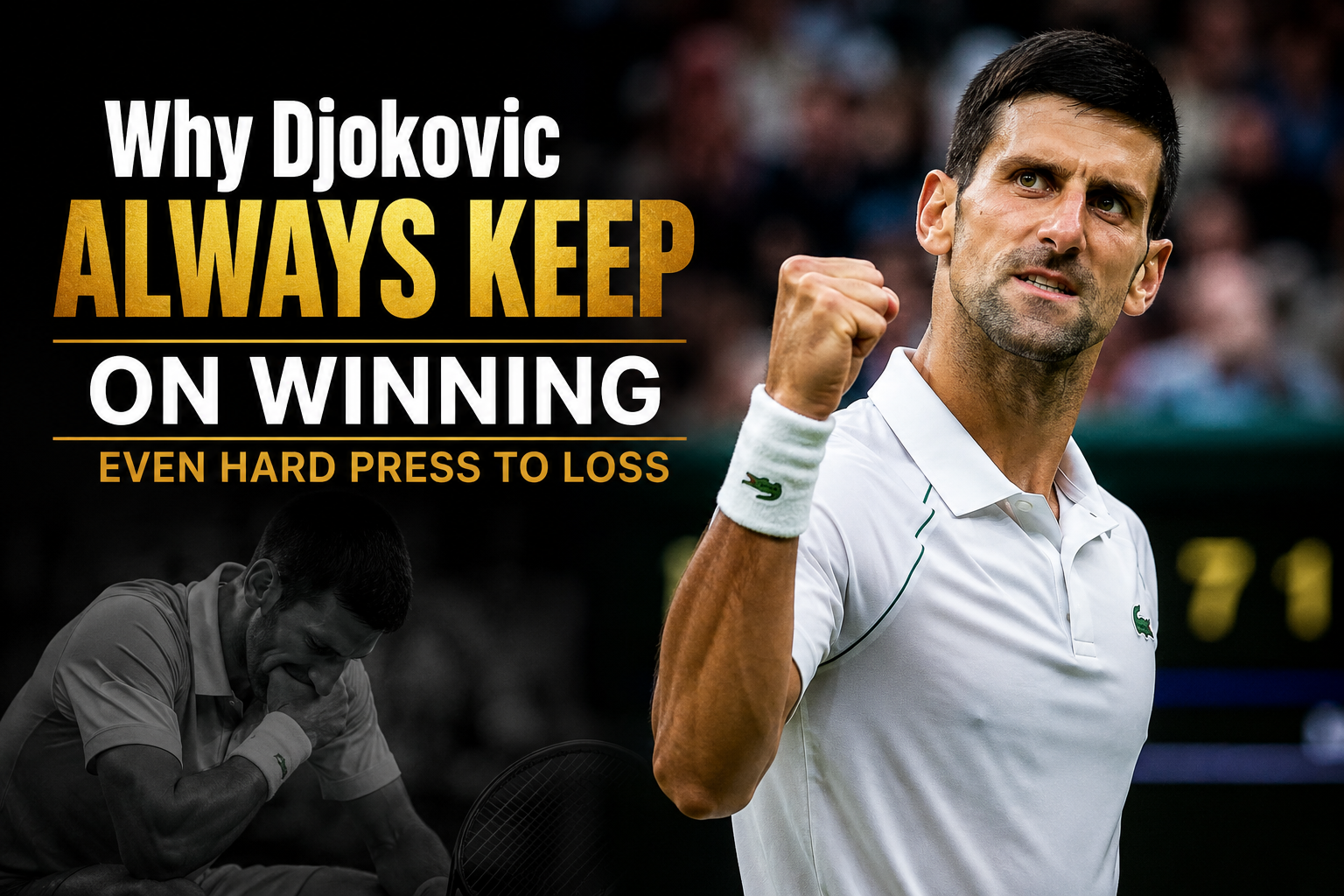
Tennis is often called "physical chess." At the professional level, nearly every player has world-class strokes and fitness. What separates the greatest players is what happens between the ears. Here are the reasons tennis is such a mental sport—and why Novak Djokovic has been able to keep winning even as he has gotten older.
1. Every point is a new battle Unlike many sports, there is no game clock. A player can lose five points in a row and still win the match. Elite players constantly ask themselves: Should I attack or defend? Where will my opponent serve next? Is this the right time to take a risk? A single poor decision can change an entire match.
2. Djokovic stays calm under pressure This is probably his greatest strength. When most players face break point or match point, their heart rate rises and they rush. Djokovic often: Slows his breathing. Keeps the same routine before serving or returning. Focuses only on the next point. His emotional control allows him to perform at his normal level when the pressure is highest.
3. He solves problems during the match Djokovic is one of the best tactical thinkers in tennis. If Plan A isn't working, he quickly changes: Return position. Rally patterns. Shot height and spin. Pace of play. Many players keep hitting harder. Djokovic keeps thinking.
4. His defense frustrates opponents He is famous for turning defense into offense. Players believe they have hit a winner—but Djokovic reaches the ball and sends it back. After this happens repeatedly, opponents often: Become impatient. Go for low-percentage winners. Make more unforced errors. He wins many points before the final shot is even hit because of the pressure he creates.
5. Experience is a huge advantage After more than 20 years on tour, Djokovic has experienced nearly every situation: Two-set deficits. Five-set marathons. Match points saved. Grand Slam finals. Hostile crowds. When younger players panic, he has already lived through that situation dozens of times.
6. He takes exceptional care of his body Although he is older than most of his rivals, Djokovic extends his career through: Excellent flexibility. Efficient movement. Smart scheduling. Recovery and nutrition. Injury prevention. He no longer relies on youthful speed alone—he relies on efficiency.
7. He believes he can win Champions develop confidence from repeated success. When Djokovic falls behind, he doesn't think, "I'm losing." He thinks, "I've come back from this before." That belief changes how he plays important points. What makes him different from other professionals? Most ATP players have: Powerful serves. Big forehands. Excellent fitness. Djokovic combines all of these with qualities that are much rarer: Elite mental toughness. The greatest return of serve in tennis history, according to many analysts. Extraordinary anticipation. Tactical intelligence. Emotional discipline. Consistency over five sets. Lessons for club and recreational tennis players If you've played tennis for many years, you'll probably recognize these patterns: Don't think about the score—play one point at a time. Stay calm after mistakes. Force your opponent to hit one extra ball. Change tactics instead of hitting harder. Build routines before every serve and return. At recreational levels, improving your mental game can often make a bigger difference than improving your forehand. In many matches, the player with the stronger mind—not the harder shot—walks off the court as the winner.