
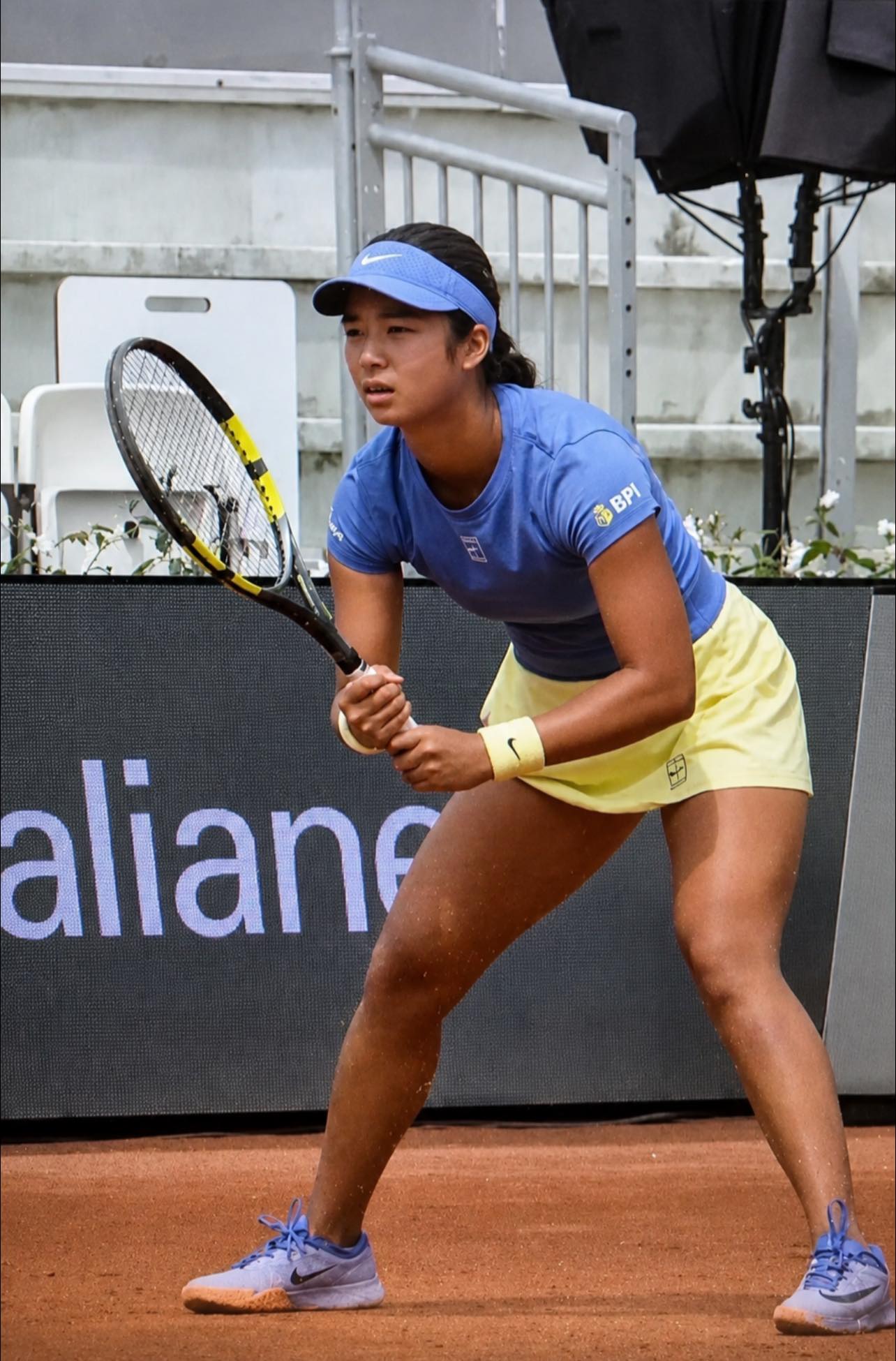
The rise of Alex Eala is no longer just a story for Philippine tennis fans. Across the global tennis community, coaches, analysts, and former players are beginning to recognize something different in her development curve. The young Filipina has steadily transformed from a promising junior champion into a serious professional competitor capable of challenging higher-ranked opponents on bigger stages.
For many years, tennis in Southeast Asia struggled to consistently produce players who could compete with the elite depth of Europe and North America. Yet Alex Eala is changing that perception. Her game is evolving rapidly, her physical strength continues to improve, and her tactical maturity now resembles players much older than her age.
From the perspective of a USA-based tennis coach, what makes Eala especially interesting is not simply her ranking progress. It is the way her game is mutating and adapting to the modern demands of women’s tennis. The WTA Tour today rewards athletes who can evolve quickly under pressure, adjust styles mid-match, and survive the increasingly physical pace of elite competition.
Alex Eala appears to be building exactly those traits.
The question now is no longer whether she can become a consistent Top 100 player. Many coaches believe that stage is only temporary. The bigger question is whether she can eventually break into the Top 20 and establish herself among the elite players in women’s tennis.
The Early Foundation of Alex Eala
Alex Eala’s development did not happen overnight. Her junior success provided early evidence that she possessed high-level potential. Winning Grand Slam junior titles demonstrated not only technical ability but also the mental discipline required to compete internationally.
Unlike many junior stars who struggle during the transition to professional tennis, Eala has shown a strong understanding of adaptation. That transition period is often where talented players fail because the professional level demands:
- Greater physical endurance
- Faster shot tolerance
- Tactical flexibility
- Mental resilience
- Consistent recovery routines
Many juniors dominate using raw talent alone. Professional tennis is different. It becomes a daily battle of problem-solving.
Eala’s gradual rise in the rankings suggests that her team understands this reality very well.
The Modern Evolution of Women’s Tennis
To understand Alex Eala’s future potential, it is important to understand how women’s tennis itself has evolved.
The modern WTA Tour is far more aggressive and athletic than it was 15 years ago. Players are taller, stronger, and capable of generating tremendous pace from both wings. Baseline exchanges now resemble controlled warfare rather than simple rallies.
Today’s elite players must combine:
- Explosive movement
- Defensive recovery
- Offensive transition
- Mental adaptability
- Tactical intelligence
This is where the concept of “game mutation” becomes important.
In tennis coaching terminology, mutation refers to the ability of a player’s style to evolve based on competition demands. Great players constantly adapt. Their games are never static.
We saw this evolution in:
- Serena Williams
- Iga Swiatek
- Aryna Sabalenka
- Coco Gauff
Each player transformed aspects of their game to remain competitive.
Alex Eala appears to be entering this same developmental phase.
Alex Eala’s Tactical Evolution
One of the biggest improvements in Eala’s game has been her court construction.
Earlier in her career, she relied heavily on consistency and left-handed patterns. That style worked well in junior tennis, but professional opponents exposed limitations when rallies became faster and more physical.
Recently, however, several changes are visible:
Improved Offensive Transition
Eala now steps inside the baseline more confidently. She attacks shorter balls earlier and looks to finish points rather than simply extending rallies.
This is critical for Top 20 tennis.
Passive players rarely survive at elite WTA level because power hitters punish defensive positioning.
Better Point Variation
Modern tennis rewards unpredictability. Eala has improved her use of:
- angle changes
- depth variation
- crosscourt pressure
- down-the-line acceleration
- net approaches
Variation disrupts rhythm players and prevents opponents from controlling baseline tempo.
Enhanced Physical Strength
The difference between Top 100 and Top 20 often comes down to physical durability.
Eala’s movement has become noticeably stronger:
- faster recovery steps
- improved balance
- stronger lower-body explosiveness
- better endurance in long rallies
This physical evolution is essential for surviving deep tournament runs.
The Importance of Left-Handed Advantage
Left-handed players always create unique tactical problems in tennis.
Eala’s lefty patterns naturally force opponents into uncomfortable backhand exchanges. Her serve angles especially become dangerous on big points.
Historically, left-handed players have often disrupted traditional patterns because opponents see them less frequently.
Examples include:
- Rafael Nadal
- Petra Kvitova
- Angelique Kerber
Eala may not yet possess their level of power, but the tactical advantage remains valuable.
If she continues improving her first serve and aggressive forehand patterns, her left-handed game could become extremely dangerous on hard courts and clay.
Mental Adaptation: The Hidden Factor
Ranking progression is not only about strokes and fitness.
The biggest mutation in elite players often happens mentally.
Young athletes frequently struggle with:
- expectations
- pressure
- media attention
- ranking anxiety
- consistency
Alex Eala represents an entire nation in a sport where the Philippines historically had limited representation at the elite level. That creates enormous pressure.
However, one encouraging sign is her composure during difficult matches.
Top coaches in the USA often evaluate:
- body language
- emotional control
- recovery after mistakes
- decision-making under stress
Eala has shown increasing maturity in these areas.
She does not panic easily during momentum swings. That is a trait shared by future elite players.
Why Her Ranking Could Rise Faster Soon
Many fans focus too heavily on current rankings without understanding how quickly tennis rankings can change.
Once a player builds momentum and confidence, ranking acceleration can happen rapidly.
Several reasons suggest Eala could climb significantly over the next few seasons:
Increased Tour Experience
Professional tennis becomes easier tactically after repeated exposure.
Players begin recognizing:
- opponent patterns
- match rhythms
- travel management
- tournament pacing
Experience reduces emotional fatigue.
Physical Prime Is Still Ahead
Eala is still developing physically.
Many WTA players reach their peak between:
- ages 22 to 27
This means her strongest physical years may still be several seasons away.
Improved Coaching Systems
Modern player development relies heavily on:
- analytics
- biomechanics
- recovery science
- nutrition
- sports psychology
As Eala gains access to stronger resources and experience, her ceiling rises.
Can Alex Eala Reach the Top 20?
From a coaching perspective, the answer is yes — but with conditions.
Breaking into the Top 20 requires more than talent. It requires elite consistency across the entire season.
Players must:
- win against lower-ranked opponents regularly
- survive physically through long tournaments
- maintain confidence after losses
- continuously evolve tactically
Eala’s path toward the Top 20 depends heavily on three areas.
1. Serve Development
The modern women’s game heavily rewards free points from the serve.
If Eala increases:
- first serve speed
- placement accuracy
- second serve aggression
her hold percentage will improve dramatically.
2. Forehand Aggression
Top 20 players usually possess at least one elite offensive weapon.
Eala’s forehand could become that weapon if she continues developing explosive acceleration and confidence inside the court.
3. Tournament Scheduling
Young players sometimes burn out physically by playing too many events.
Smart scheduling is essential for:
- recovery
- training blocks
- injury prevention
- peak performance periods
If managed properly, her ranking trajectory could accelerate quickly.
The Influence of Global Tennis Exposure
Another major factor helping Alex Eala is globalization.
Today’s players no longer develop in isolation. They compete internationally from a young age, facing diverse styles regularly.
This exposure accelerates adaptation.
Eala’s international experience helps her understand:
- European clay tactics
- American hard-court aggression
- Asian speed-based exchanges
The ability to adapt across surfaces is essential for Top 20 consistency.
Comparing Alex Eala to Other Rising Players
One important observation among coaches is that Eala’s development appears sustainable.
Some young stars rise quickly using pure power but later struggle with injuries or inconsistency.
Eala’s progression feels more balanced:
- technical growth
- physical improvement
- tactical maturity
- emotional development
That balance often creates longer careers.
Players like Jessica Pegula and Ons Jabeur demonstrated that intelligent development can eventually compete with raw power.
Eala may follow a similar path.
Mutation of the Modern Baseline Game
The phrase “mutation game” perfectly describes modern tennis evolution.
The baseline game today constantly changes because technology, training, and player athleticism continue advancing.
Alex Eala’s adaptation includes:
- earlier ball striking
- improved defensive transitions
- heavier topspin usage
- smarter court positioning
These are signs of a player evolving with the sport rather than resisting change.
That adaptability separates long-term contenders from temporary prospects.
The Philippine Tennis Effect
Alex Eala’s rise is also important culturally.
Her success could influence:
- tennis participation in the Philippines
- sponsorship growth
- junior development programs
- tennis infrastructure
Young athletes often need visible role models.
Eala is becoming that figure for Philippine tennis.
The impact may extend beyond her personal ranking.
Future Prediction: The Next Five Years
From a USA coach’s perspective, Alex Eala’s trajectory suggests strong long-term potential.
Short-Term Prediction (1–2 Years)
- consistent WTA Tour appearances
- more Top 50 wins
- improved Grand Slam performances
- entry into Top 60–40 range
Mid-Term Prediction (3–5 Years)
If development continues steadily:
- Top 30 ranking becomes realistic
- deep WTA tournament runs
- possible Grand Slam second-week appearances
- increased consistency against elite opponents
Top 20 Potential
Reaching the Top 20 is extremely difficult, but Eala possesses several traits that make it achievable:
- tactical intelligence
- adaptability
- left-handed advantage
- improving physical game
- mental resilience
Her ceiling may ultimately depend on whether her offensive weapons continue evolving enough to consistently pressure elite power hitters.
Final Thoughts
Alex Eala’s ranking progress is not accidental. It reflects years of disciplined development, international exposure, and strategic adaptation.
The most exciting part of her journey may not even be her current ranking. It is the visible evolution of her game.
Modern tennis rewards players who can mutate, adapt, and reinvent themselves continuously. Alex Eala appears to understand that reality earlier than many young professionals.
Her movement is stronger.
Her aggression is improving.
Her tactical maturity is growing.
Her confidence continues rising.
The climb toward the Top 20 will still require patience, health, and consistent improvement. But the foundation is clearly there.
For tennis fans in the Philippines and around the world, Alex Eala is becoming more than a prospect. She is evolving into a serious force in the future of women’s tennis.