
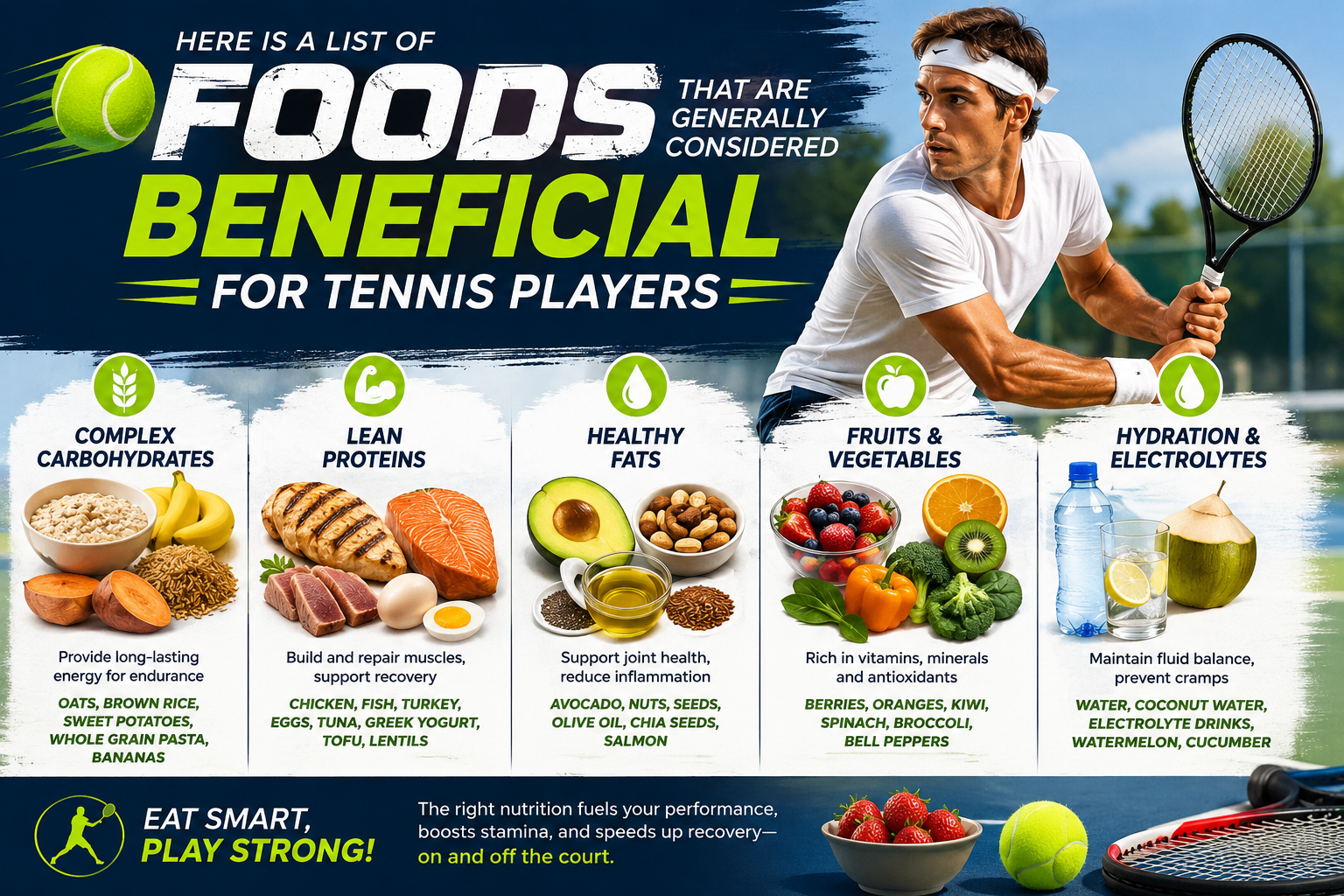
- Carbohydrates: Provide energy for long matches and practices. Good sources include whole grains like brown rice, quinoa, whole wheat pasta, and oatmeal.
- Proteins: Aid in muscle repair and recovery. Lean proteins like chicken, turkey, fish, tofu, and beans are ideal.
- Healthy Fats: Provide sustained energy and support overall health. Avocado, nuts, seeds, and olive oil are good sources.
- Fruits and Vegetables: Rich in vitamins, minerals, and antioxidants. They help with hydration and overall health. Examples include berries, oranges, spinach, kale, and bell peppers.
- Dairy or Dairy Alternatives: Good sources of calcium and vitamin D for bone health. Options include milk, yogurt, and fortified plant-based alternatives like almond or soy milk.
- Hydration: Water is essential for staying hydrated, but sports drinks can be beneficial during long matches to replenish electrolytes.
- Snacks: Nutritious snacks like energy bars, trail mix, or fruits can provide quick energy during matches or practices.
It's important to balance these foods to meet your individual needs based on activity level, body size, and health goals. Consulting with a sports nutritionist can help you create a personalized nutrition plan.