
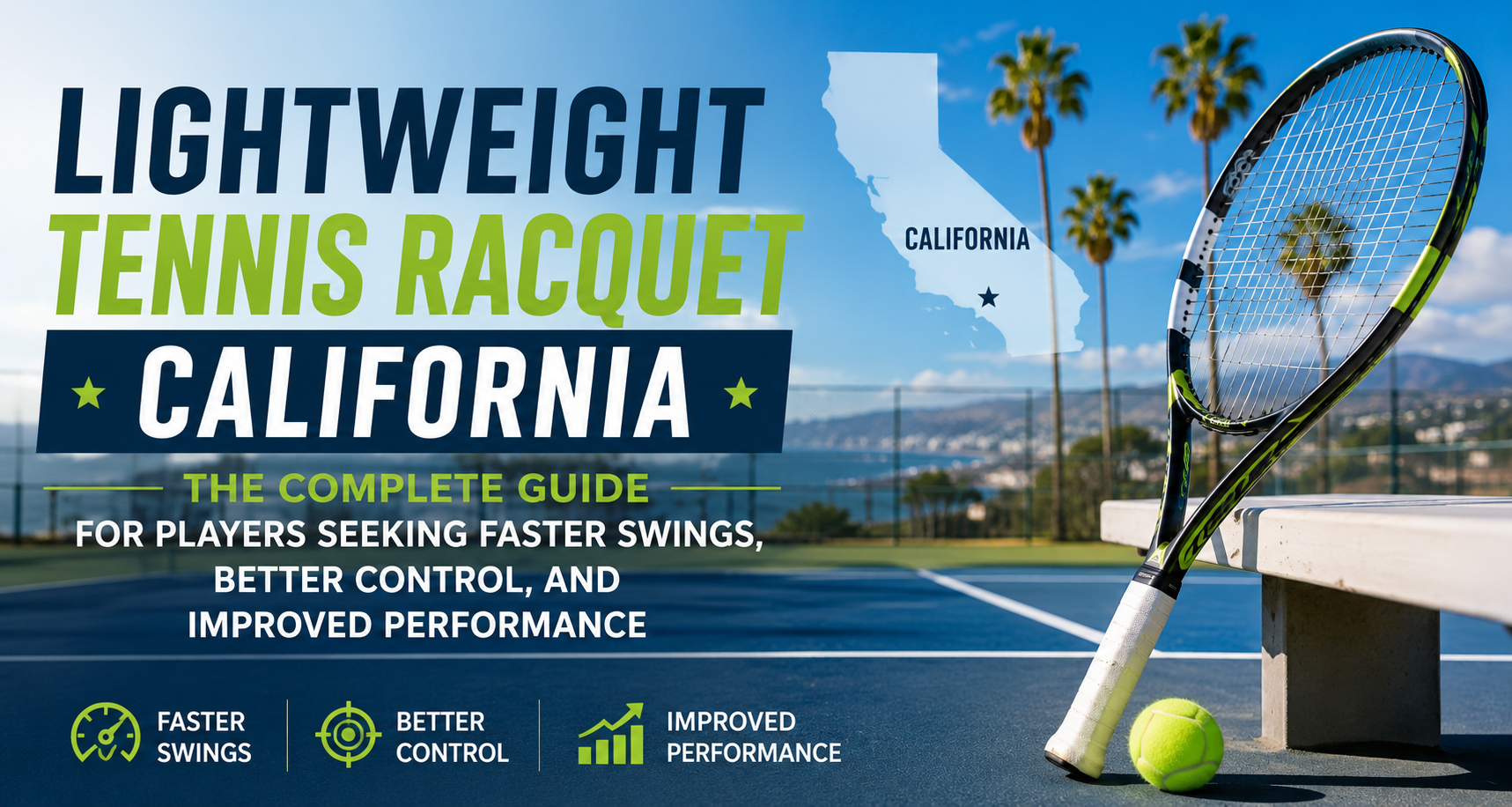
Lightweight Tennis Racquet California: Why More Players Are Making the Switch
California has long been one of America's most influential tennis regions best location to play on your tennis . From the public courts of Los Angeles and San Diego to the world-class facilities of Indian Wells, players across the state are constantly searching for equipment that helps them compete at a higher level.
One trend has become increasingly clear: lightweight tennis racquets are growing in popularity among recreational players, juniors, seniors, and even advanced competitors. Your strokes affect your skills if the racquest is not fitted on your strokes .
The appeal is easy to understand. A lighter racquet can help players generate faster racquet-head speed, react more quickly during fast exchanges, and reduce fatigue during long matches. In California's year-round tennis climate, where players often spend multiple days per week on court, equipment that improves comfort and efficiency can make a significant difference.
Whether you play in Southern California's competitive club scene or participate in local leagues throughout Northern California, understanding how lightweight tennis racquets work can help you choose the right equipment for your game.
What Is Considered a Lightweight Tennis Racquet?
A lightweight tennis racquet generally weighs less than 10.5 ounces (approximately 298 grams) when strung.
Most racquets fall into the following categories:
Ultra-Lightweight Racquets
- Below 9.5 ounces
- Ideal for beginners this start for the early bigginers leve entry game
- Easy to swing
- Excellent maneuverability
Lightweight Racquets
- 9.5 to 10.5 ounces
- Popular among recreational players just like my friend name Gigo at age 75 years old.
- Balanced blend of power and comfort
Midweight Racquets
- 10.6 to 11.4 ounces
- Preferred by many intermediate and advanced players. They need to generate power power this match their game
- Greater stability and control. The groovez make you feel connected your to your stroke
Heavyweight Racquets
- Above 11.5 ounces
- Often used by advanced competitors
- Maximum stability and plow-through
Many California players discover that a lightweight frame allows them to maintain consistency during long practice sessions while reducing physical strain.
Benefits of Lightweight Tennis Racquets
Faster Swing Speed
One of the biggest advantages is increased racquet-head speed. IF your stamina game is weak this help you recover faster.
A lighter frame enables players to accelerate more quickly through contact, producing greater spin and improved shot-making opportunities.
This is especially valuable on California hard courts where topspin can be an effective weapon.
Reduced Arm Fatigue
Tennis players often participate in multiple matches, league competitions, clinics, and practice sessions each week. When the string and racquest doe not match you feel the pain your your arms some get injuries.
A lightweight racquet places less demand on the shoulder and arm muscles, helping players stay fresher throughout extended sessions.
Better Maneuverability at Net
Fast exchanges near the net require quick reactions.
Lightweight racquets can improve volley performance because they move more rapidly through space, allowing players to adjust to unexpected shots.
Easier Learning Curve
Many coaches recommend lightweight racquets for beginners because they help develop proper technique.
Players can focus on stroke mechanics without fighting against excessive racquet weight.
Why California Players Prefer Lightweight Racquets
California offers unique tennis conditions.
Year-Round Tennis Weather
Unlike many states where players spend months indoors, California players often compete throughout the entire year.
More court time means more repetitive motion.
Reducing strain through lighter equipment can support long-term participation.
High Junior Participation
California consistently produces elite junior players.
Many developing athletes begin with lighter racquets before transitioning into heavier performance frames as their strength increases.
Competitive Club Tennis
Thousands of adult players participate in local leagues and club competitions.
Lightweight racquets allow recreational competitors to maintain performance while minimizing fatigue during back-to-back matches.
Best Lightweight Racquet Features
Head Size
Larger head sizes provide:
- Larger sweet spots
- More forgiveness
- Increased power
Common sizes include:
- 100 square inches
- 102 square inches
- 105 square inches
Balance Point
Head-light racquets improve maneuverability.
Even when overall weight is low, balance significantly influences how the racquet feels during play.
String Pattern
Open string patterns such as 16x19 often help players generate additional spin.
California's baseline-oriented tennis style frequently favors spin-friendly setups.
Frame Stiffness
A more flexible frame generally delivers greater comfort.
A stiffer frame may produce more power but can transmit additional vibration.
Lightweight Racquets for Beginners
Beginners often benefit from:
- Larger sweet spots
- Lightweight construction
- Forgiving response
- Easy power generation
The goal is to develop confidence and consistency while minimizing frustration.
A racquet that feels too heavy may hinder stroke development and reduce enjoyment.
Lightweight Racquets for Intermediate Players
Intermediate competitors frequently seek:
- Better control
- Improved spin
- Enhanced maneuverability
- Increased consistency
Many players in California's USTA leagues find lightweight performance racquets ideal for balancing power and precision.
Lightweight Racquets for Senior Players
Senior tennis participation continues to grow throughout California.
Many older players appreciate lightweight frames because they:
- Reduce stress on joints
- Improve swing comfort
- Enhance reaction speed
- Support longer playing sessions
Modern lightweight racquets often provide enough stability to remain competitive while improving overall comfort.
Lightweight Racquets for Women
Many female players choose lightweight frames because they offer:
- Easier acceleration
- Greater maneuverability
- Reduced fatigue
- Better net play responsiveness
However, racquet selection should always depend on individual strength, technique, and playing style rather than gender alone.
Lightweight Racquets for Junior Players
Developing juniors benefit from racquets that allow proper technique.
Using a frame that is too heavy can encourage poor mechanics and increase injury risk.
Coaches often recommend gradually increasing racquet weight as strength and skill improve.
Common Myths About Lightweight Racquets
Myth 1: Lightweight Means Less Power
Not necessarily.
Modern racquet technology can generate substantial power even in lighter frames.
Myth 2: Advanced Players Never Use Lightweight Racquets
Many advanced players customize racquets to achieve specific performance goals.
Some begin with lighter frames and add weight strategically.
Myth 3: Lightweight Racquets Lack Stability
Modern engineering has significantly improved stability in lightweight designs.
Frame construction, balance, and material composition all contribute to performance.
Injury Prevention and Lightweight Racquets
Proper equipment can support injury prevention.
Common tennis issues include:
- Tennis elbow
- Shoulder fatigue
- Wrist discomfort
- Forearm strain
While technique remains critical, selecting a racquet that suits the player's physical capabilities can reduce unnecessary stress.
Choosing the Right Lightweight Racquet
Consider the following factors:
Skill Level
Choose a racquet designed for your current level rather than your future aspirations.
Playing Style
Baseline players may prioritize spin.
Net players may prioritize maneuverability.
All-court competitors often seek balanced performance.
Physical Strength
Racquet weight should complement natural strength and conditioning levels.
Comfort Preferences
Every player responds differently to frame stiffness, balance, and string setup.
Testing multiple options is highly recommended.
California Tennis Trends and Equipment Choices
California remains one of the most influential tennis markets in the United States.
Players across Los Angeles, San Diego, Orange County, Sacramento, San Jose, and the Bay Area continue to embrace modern racquet technologies designed to improve comfort, power, and consistency.
Lightweight racquets have become increasingly popular because they align with contemporary playing styles that emphasize:
- Heavy topspin
- Fast court coverage
- Quick transitions
- Aggressive baseline play
These characteristics fit well with California's highly competitive tennis environment.
Final Thoughts
Lightweight tennis racquets continue to transform how players approach the game.
For California tennis enthusiasts, the benefits are particularly appealing. Faster swings, improved maneuverability, reduced fatigue, and increased comfort make lightweight frames an attractive option for players of all ages and skill levels.
The ideal racquet is not necessarily the lightest or heaviest model available. Instead, it is the racquet that best matches your technique, physical abilities, and playing goals.
By carefully evaluating weight, balance, head size, string pattern, and comfort characteristics, California players can find a lightweight tennis racquet that enhances performance while making every session on the court more enjoyable.
As tennis continues to thrive throughout California, lightweight racquets will likely remain one of the most popular equipment choices for athletes seeking a competitive advantage and a more comfortable playing experience.