Medical education for junior tennis players, parents, coaches, and tennis professionals
Quick Overview
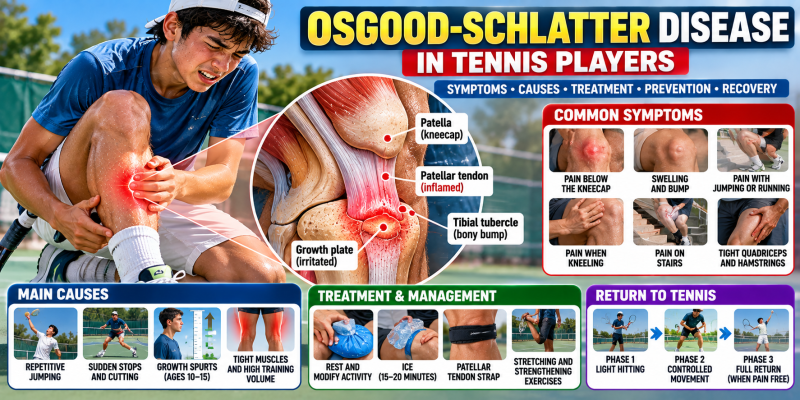
Osgood-Schlatter disease is a common overuse condition that causes pain and swelling at the front of the knee, just below the kneecap. It most often affects growing adolescents, particularly those who participate in sports involving running, jumping, rapid acceleration, and sudden stops.
For junior tennis players, repeated split-steps, explosive lateral movements, deep knee bends, and sudden deceleration can place repeated pulling forces on the patellar tendon where it attaches to the tibial tubercle — the bony prominence at the top of the shinbone.
During a growth spurt, this attachment area is still developing. Repeated stress can irritate the growth region and cause pain, tenderness, and a noticeable bump below the kneecap.
Although Osgood-Schlatter disease can interfere with training and competition, it is generally a temporary condition that improves as the knee matures. The goal is to control symptoms, adjust tennis workloads, maintain appropriate strength and flexibility, and allow a safe return to play.
Key Symptoms of Osgood-Schlatter Disease
Common symptoms include:
-
Pain below the kneecap: Discomfort directly over the tibial tubercle, particularly during tennis activity.
-
Tenderness and swelling: The bony area may feel sore when touched or pressed.
-
A prominent bump: A noticeable lump may develop below the kneecap and can remain visible even after pain improves.
-
Pain with jumping and sprinting: Smashes, explosive first steps, and sudden stops may aggravate symptoms.
-
Pain during kneeling or stair climbing: Bending the knee or putting pressure on the affected area may cause discomfort.
-
Thigh muscle tightness: Tight quadriceps and hamstrings may contribute to increased stress around the knee.
Symptoms commonly worsen during periods of rapid growth or when training volume increases too quickly.
Why Tennis Players Develop Osgood-Schlatter Disease
Tennis demands repeated forceful movements that place stress on the knee extensor mechanism.
1. Repetitive acceleration and deceleration
Moving quickly toward a drop shot or stopping suddenly after a wide forehand places significant loads on the quadriceps and patellar tendon.
2. Frequent jumping
Jumping for serves and overhead smashes repeatedly loads the knee extensor mechanism, particularly when landing.
3. Growth spurts
During adolescence, bones may grow faster than muscles and tendons adapt. This can increase tension at the tendon attachment below the kneecap.
4. High training volume
Long practice sessions, consecutive tournament days, and inadequate recovery may aggravate symptoms.
5. Limited flexibility or movement control
Tight thigh muscles, poor landing mechanics, and inadequate lower-body strength may contribute to excessive loading, although they are not the only causes.
Osgood-Schlatter disease is not necessarily the result of poor technique or a single mistake. It often develops from the interaction between skeletal growth and repetitive sports loading.
How Is Osgood-Schlatter Disease Diagnosed?
A sports medicine physician, pediatrician, or orthopedic specialist can evaluate a young tennis player with persistent pain below the kneecap.
1. Medical history and physical examination
The clinician may ask when the pain started, whether it worsens after tennis, and whether the athlete is experiencing a growth spurt. The examination may assess tenderness over the tibial tubercle, swelling, knee movement, muscle flexibility, and strength.
2. Imaging when necessary
X-rays are not always needed when symptoms and examination findings are typical. A clinician may recommend imaging if the injury followed a sudden traumatic event, symptoms are unusual, or another condition needs to be ruled out.
Important: Do not assume every case of pain below the kneecap is Osgood-Schlatter disease. Other knee injuries can produce similar symptoms.
Treatment and Management for Junior Tennis Players
The primary goal is to reduce pain and excessive stress on the growing knee while preserving fitness where possible.
1. Modify tennis activity
Adjust training according to the athlete's symptoms. Temporarily reduce activities that provoke pain, such as:
-
Repeated explosive split-steps and sprints.
-
Aggressive lateral movement and sudden stops.
-
Repeated jumping for serves and smashes.
-
Deep squats, lunges, or sliding drills that increase knee pain.
If the player limps, has significant pain, or cannot move normally, stop tennis and arrange a medical assessment. Complete rest from all activity is not always necessary, but playing through significant pain is not a sensible recovery strategy.
2. Apply ice after aggravating activity
Apply a cold pack wrapped in a thin towel to the painful area for approximately 15–20 minutes after activity. Never put ice directly on the skin.
Reduce or stop the activity if symptoms worsen rather than relying on ice to continue playing.
3. Use medication carefully
Pain-relieving medicines may sometimes be appropriate, but a parent or caregiver should consult a healthcare professional about suitable options and dosing for a child or teenager. Do not use medication simply to mask pain and continue intense training.
4. Begin appropriate rehabilitation
A physical therapist can tailor exercises to the athlete's pain level and movement needs.
Rehabilitation may include:
-
Gentle quadriceps and hamstring flexibility exercises.
-
Hip and gluteal strengthening.
-
Progressive quadriceps strengthening when tolerated.
-
Core stability and balance training.
-
Controlled landing, deceleration, and footwork exercises as symptoms improve.
Avoid forcing painful stretches or heavy knee-loading exercises during a flare-up. Exercise selection and progression should be guided by symptoms and, when needed, a qualified clinician.
5. Consider supportive equipment
A patellar tendon strap placed below the kneecap may reduce discomfort for some athletes. A padded knee sleeve or knee pad may protect the tender bump from direct contact.
These supports are optional symptom-management aids; they do not cure the condition or make it safe to play through significant pain.
Prevention Strategies for Junior Tennis Players
Osgood-Schlatter disease cannot always be prevented, particularly during rapid growth. However, sensible training practices may help manage excessive stress on the knee.
Manage training loads. Avoid sudden increases in practice duration, tournament frequency, sprint drills, and jumping volume. Schedule recovery days when appropriate.
Warm up progressively. Start with easy movement and gradually increase intensity before practicing high-speed footwork.
Maintain flexibility and strength. Include age-appropriate exercises for the quadriceps, hamstrings, hips, and core.
Develop sound movement mechanics. Coaches can teach controlled deceleration, balanced landings, and efficient changes of direction.
Monitor growth and symptoms. Parents and coaches should pay attention to new knee pain during growth spurts. Persistent pain should trigger an adjustment to training and, if needed, a professional assessment.
Use appropriate footwear. Tennis shoes should fit well and provide suitable support and traction for the court surface.
These measures can help manage loading, but no stretching routine, shoe, or strap guarantees prevention.
Return-to-Tennis Protocol
Return to tennis should be based on function and symptoms rather than a fixed number of days. A sports medicine professional or physical therapist can help determine when the athlete is ready to progress.
Phase 1: Everyday Movement and Recovery
Goal: Restore comfortable daily function.
Walk and climb stairs without a limp. Begin gentle mobility and prescribed strengthening exercises as tolerated. Avoid painful jumping and sprinting.
Phase 2: Controlled Court Practice
Goal: Reintroduce tennis-specific movements.
Start with easy stationary groundstrokes and short, controlled movement. Increase court coverage only if symptoms remain well controlled during practice and afterward.
Phase 3: Progressive Footwork and Intensity
Goal: Restore movement confidence and tolerance.
Gradually add lateral drills, controlled acceleration and deceleration, and jumping when appropriate. Monitor pain during the session and over the following day.
Phase 4: Return to Full Practice and Competition
Goal: Tolerate match demands safely.
Resume full training and matches progressively when sport-specific movements can be completed without significant pain, limping, or worsening symptoms. Seek clinical guidance before returning if symptoms have been substantial or persistent.
If pain increases during a stage or becomes worse the next day, reduce the workload and return to a previously tolerated level. Do not advance simply because a tournament is approaching.
When Should You Seek Medical Attention?
Arrange a medical assessment if knee pain persists, repeatedly returns during tennis, interferes with walking, or fails to improve with activity modification.
Seek urgent medical assessment if the athlete has:
-
Sudden, severe pain after a jump, fall, or direct impact.
-
Rapid swelling or inability to bear weight.
-
A visibly deformed knee or inability to straighten it.
-
A hot, red knee accompanied by fever or feeling very unwell.
These symptoms may indicate an injury or condition other than uncomplicated Osgood-Schlatter disease.
Frequently Asked Questions
Can a junior tennis player continue playing with Osgood-Schlatter disease?
Some athletes can continue modified activity if symptoms are mild and movement remains normal. Painful drills should be reduced or avoided. Athletes who limp or have significant pain should stop playing and be assessed.
Does Osgood-Schlatter disease cause permanent knee damage?
The condition generally improves as the growth area matures. However, the bony bump can remain after the pain resolves, and some athletes experience prolonged or recurring symptoms. Persistent pain warrants reassessment.
How long does recovery take?
Recovery varies with symptom severity, growth, training demands, and how well aggravating activities are managed. Symptoms may last weeks or months and can recur during growth spurts. There is no single recovery timeline that applies to every athlete.
Will a knee strap cure Osgood-Schlatter disease?
No. A patellar tendon strap may help some players feel more comfortable, but it does not resolve the underlying irritation. Activity modification and an appropriate rehabilitation plan remain important.
Can adults develop Osgood-Schlatter symptoms?
The condition primarily affects growing adolescents. Adults who have persistent pain around the tibial tubercle should be evaluated for possible residual changes or other causes of knee pain.
Final Advice for Tennis Players, Parents, and Coaches
Osgood-Schlatter disease can be frustrating for a junior player who wants to practice and compete. The best approach is to recognize symptoms early, manage training loads, develop strength and flexibility appropriately, and progress back to tennis based on the athlete's function rather than pressure to compete.
Parents and coaches should support recovery rather than encourage athletes to hide pain. With suitable management and patience, most young athletes improve as they mature.
Medical disclaimer: This article provides general educational information and does not replace an individual assessment, diagnosis, or treatment plan from a qualified healthcare professional.