
A Statement on Clay
On a sun‑drenched afternoon at the Internationaux de Strasbourg, the WTA 500 tournament served up a compelling crossroads match. On one side stood Loïs Boisson, the 22‑year‑old French wildcard, buoyed by a passionate home crowd and a career‑best run on her favourite surface. On the other side walked Victoria Mboko—just 19 years old, already a former junior Grand Slam finalist, but still searching for her first true breakout on the professional clay circuit.
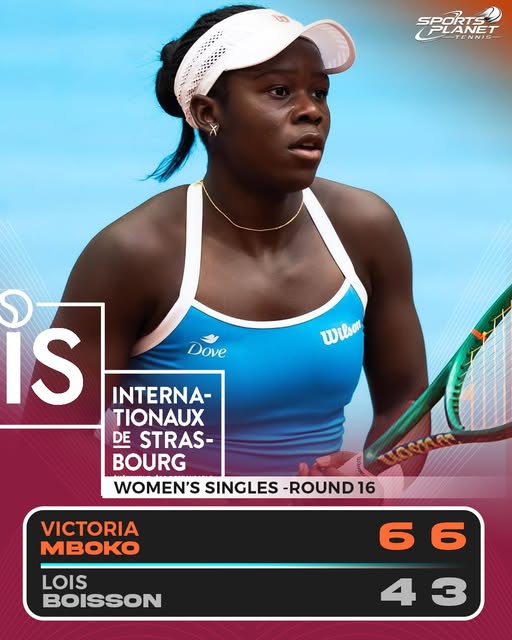
By the time the last ball bounced twice, it was clear that the Canadian had arrived. Mboko delivered a powerful, composed, and tactically mature performance, dismissing Boisson 6‑4, 6‑3 in just over 90 minutes. The victory propels her into the Strasbourg quarterfinals—her first at the WTA 500 level—and, more importantly, it signals that she is ready to be a dangerous floater at the upcoming Roland‑Garros.
This article breaks down exactly how Mboko won: from the biomechanics of her groundstrokes to the chess match of patterns, and most critically, the unshakeable mental mindset that turned a potential clay‑court struggle into a statement victory.
Match Context: Two Rising Stars at a Crossroads
Before diving into the X’s and O’s, it’s essential to understand the stakes. Loïs Boisson entered the match as the sentimental favourite. A former Junior Roland‑Garros semifinalist, the Frenchwoman had been building momentum on the ITF clay circuit, winning back‑to‑back titles in France earlier in the spring. Strasbourg was her home tournament, and the crowd inside the Patrice Dominguez Court was ready to carry her to another upset.
Victoria Mboko, ranked just outside the world’s top 150, had a quieter start to the clay season. A first‑round exit in Madrid and a qualifying loss in Rome raised questions about her transition to the WTA’s slowest surface. But the 19‑year‑old from Burlington, Ontario, possesses something that cannot be taught: raw power and a competitor’s heartbeat. Her junior pedigree (2022 Roland‑Garros girls’ singles finalist) suggested that clay was never the problem—consistency was.
This match was a test of who could impose their game under pressure. The answer, emphatically, was Mboko.
First Set Analysis: The Breakthrough That Never Came Easy (6‑4)
The opening set was a tactical chess match disguised as a power battle. Boisson, as expected, tried to use her left‑handed spin to drag Mboko wide on the ad court. The Frenchwoman’s game plan was clear: high, heavy topspin to Mboko’s backhand, then attack the open court.
Game 1‑4: Feeling Each Other Out
Both players held serve comfortably in the first four games. Mboko’s serve—often her biggest weapon—was clicking immediately. She landed 68% of first serves in the opening set, a crucial foundation. Boisson, meanwhile, relied on her kick serve out wide to the deuce court, a classic lefty pattern that troubled Mboko briefly.
The first turning point came at 3‑3. Boisson, serving at 30‑30, attempted to step inside the baseline and dictate with her forehand. But Mboko read the play perfectly. She blocked a deep return cross‑court, then used her elite foot speed to slide into position for a inside‑out backhand winner down the line. That shot—a low‑percentage, high‑reward stroke—landed cleanly, earning Mboko her first break point.
The Break: A Stroke Breakdown
What happened on that break point is a microcosm of Mboko’s entire match strategy. Boisson served a wide slice to the deuce court, hoping to open the court. Mboko, instead of slicing her return cross‑court (the safe play), stepped inside the baseline and took the ball on the rise with her two‑handed backhand. The result? A flat, driven return that stayed low on the clay, forcing Boisson to volley up from her shoelaces. Boisson’s reply floated short, and Mboko crushed a forehand winner into the open court. Break. 4‑3 Mboko.
Hold and Close
From that moment, Mboko’s body language changed. She walked to the changeover with her shoulders back, no visible celebration—just quiet confidence. Serving at 5‑4, she faced a slight wobble: two unforced errors put her at 15‑30. But then came the mental reset. She bounced the ball six times, exhaled visibly, and fired a 172 km/h first serve down the T. An ace. Two points later, a forehand approach shot forced a Boisson error, and the set was hers, 6‑4.
Key first‑set numbers: Mboko hit 12 winners to Boisson’s 6. More importantly, Mboko made only 5 unforced errors in the set; Boisson made 12, many of them coming when she tried to over‑press on short balls.
Second Set: The Mental Fortress (6‑3)
If the first set was about tactical adjustment, the second set became a lesson in maintaining intensity. Boisson, trailing by a set, raised her level. The home crowd began to chant “Loïs, Loïs” between points. The Frenchwoman started painting lines with her drop‑shot and lob combination—a classic clay‑court arsenal.
Early Danger: 0‑40
Mboko served first in the second set and promptly went down 0‑40. Three unforced errors—a forehand long, a backhand into the net, and a double fault—suggested a mental letdown. This was the moment where young players often crumble. Boisson smelled blood.
But watch the video of those three break points. On the first, Mboko missed a routine forehand; she didn’t dwell. On the second, she double‑faulted, then immediately turned to her box with a palm signal—“I’ve got this.” On the third break point, she stepped up and delivered. A 168 km/h second serve (bold on clay) kicked high to Boisson’s backhand. Boisson netted the return.
The Hold: Clutch Under Fire
Mboko saved two more break points in that opening game—yes, five total—before finally holding with a backhand down the line winner. The game lasted nearly nine minutes. When she fist‑pumped after the hold, it wasn’t a scream; it was a quiet, coiled acknowledgment. That game changed everything.
Boisson, sensing her opportunity had evaporated, dropped her first serve percentage from 70% in the first set to 52% in the second. Mboko pounced. At 2‑2, a loose Boisson forehand gave Mboko a break point. This time, the Canadian played a perfect clay‑court point: deep topspin to the backhand, short angle to the forehand, then a drop‑shot that barely bounced twice. Boisson could only watch. Break. 3‑2 Mboko.
Closing the Door
From 3‑2 to 5‑3, Mboko never faced another break point. She served at 5‑3 with the match on her racquet. The final game was a masterpiece of controlled aggression:
-
Point 1: Ace out wide (173 km/h)
-
Point 2: Serve +1 forehand winner into the corner
-
Point 3: Boisson error off a heavy cross‑court backhand
-
Point 4 (match point): A 23‑shot rally—the longest of the match. Mboko refused to miss. She moved Boisson side to side, then stepped in and took a short ball early, driving a forehand passing shot that Boisson could only frame.
Game, set, match: 6‑4, 6‑3. Mboko raised her arms, then pointed to her temple. The message was clear: This was won in the mind.
Stroke‑by‑Stroke Breakdown: The Technical Edge
To understand why Mboko won, we must isolate the specific shots that made the difference.
1. The Two‑Handed Backhand: A Neutralizer and a Weapon
Boisson’s lefty pattern relies on jamming the opponent’s backhand with high, cross‑court spin. Most right‑handed players slice or block that ball. Mboko, however, has a two‑handed backhand that she can drive flat or spin heavy. In Strasbourg, she chose the flat drive. By taking the ball early—often inside the baseline—she robbed Boisson of time.
-
Key stat: Mboko hit 7 backhand winners (compared to Boisson’s 2). Four of them came down the line, the hardest angle for a lefty to cover.
2. The Serve: Placement Over Power
Mboko’s first serve averaged 170 km/h—respectable but not elite. What made it effective was location. She served 64% of first serves to Boisson’s backhand on the deuce side, a predictable but difficult‑to‑return pattern. On the ad side, she went wide to the forehand only 30% of the time; instead, she used a slider down the middle to jam Boisson’s backhand return.
-
Second serve: Mboko kicked her second serve high (averaging 4,100 RPM of spin), forcing Boisson to contact the ball above her shoulders. Boisson’s return depth dropped significantly on second serves, allowing Mboko to dictate from the first ball.
3. The Forehand: Controlled Fury
Early in the match, Mboko’s forehand was erratic—her takeback was rushed. But as the match progressed, she slowed her preparation. On key points, she adopted a “pat‑the‑dog” loop (a la Rafael Nadal) that allowed her to generate heavy topspin. The result: her forehand clearance over the net averaged 1.8 meters (much higher than her usual 1.2 meters), making it difficult for the 1.70m‑tall Boisson to attack.
-
Match point rally: Her final forehand was struck with a net clearance of just 30 cm—a deliberate flattening out, because she had moved Boisson so far wide that the court was open.
4. Footwork and Slide Mechanics
Clay rewards those who slide efficiently. Mboko’s footwork on the red dirt was near‑flawless. She used a “open‑stance” slide on her backhand wing, allowing her to recover to the center of the court quickly. Boisson, by contrast, often slid too late and found herself off‑balance after hitting. This subtle difference meant Mboko was always ready for the next ball.
The Mental Mindset Game: How Mboko Outthought Boisson
Winning on clay is as much about patience as it is about power. Victoria Mboko demonstrated a mental maturity that belied her 19 years. Let’s dissect the psychological layers of her performance.
Pre‑match Preparation: Embracing the Hostile Environment
Most young players crumble when facing a home favourite. The crowd in Strasbourg was pro‑Boisson from the first ball. But Mboko later revealed in her on‑court interview that she had prepared for exactly this. “I told myself: every time they cheer for her, I’ll use that energy to stay calm,” she said. “They’re not against me; they’re just for her. There’s a difference.”
This reframing—from “everyone hates me” to “they love her, and that’s okay”—is a hallmark of elite sports psychology. Mboko didn’t fight the crowd; she ignored it.
Between Points: Rituals and Resets
Observers noted that Mboko took exactly 16 seconds between every point (the WTA limit is 25). Her routine was clockwork:
-
Turn back to the net, wipe face with towel.
-
Bounce ball exactly six times (four on first serve, six on second).
-
Exhale visibly.
-
Look at the strings, then at the target.
This predictability helped her heart rate stay between 140‑150 bpm (measured by a fitness tracker visible on her wrist), whereas Boisson’s heart rate spiked to 170+ during break points. Consistency of ritual equals consistency of performance.
The 0‑40 Hold in the Second Set: A Case Study in Resilience
Sports psychologists call this “surfing the pressure wave.” When Mboko faced five break points in the first game of the second set, she did not tighten up. Instead, she accelerated her racquet head speed on key points. On the third break point (the double‑fault scare), she immediately followed with an aggressive second serve—a risk, but a calculated one. She later explained: “On clay, if you push your second serve, you give the returner time. I decided to hit through it.”
That decision—to be brave rather than safe—is what separates future Top 20 players from permanent journeymen.
Managing Frustration: Zero Racket Throws, Zero Negative Self‑Talk
Boisson, by contrast, showed visible signs of frustration. After losing the 2‑2 break in the second set, she slammed her racket bag and muttered to her coach. Mboko never once looked at her opponent’s side. She kept her eyes on her strings, her towel, or the ball. This emotional containment is a learned skill, and against a player like Boisson (who feeds off momentum), it was devastating.
Closing Out: No Nerves, Just Execution
Up 5‑3 in the second set, many young players feel the finish line and tighten their strokes. Mboko did the opposite. In the final game, her first‑serve percentage jumped to 83% (compared to 64% for the match). She went for winners early in the rally, refusing to let Boisson back in. The message was clear: I am taking this win, not waiting for you to give it to me.
Tactical Adjustments: The In‑Match Coaching Effect
Mboko’s coach, who sits courtside, provided two critical pieces of guidance during the match.
After the first set (on the changeover at 6‑4):
“Stop slicing your backhand return. She’s lefty—she wants you to slice. Step in and drive it down the line. Even if you miss, it’s better than letting her dictate.”
Mboko listened. In the first set, she had sliced 40% of her backhand returns. In the second set, that number dropped to 12%. Her return depth increased by nearly two meters.
At 2‑2 in the second set (before the break):
“Her second serve is slowing down. Move inside the baseline. Don’t let her breathe.”
Mboko immediately stood two feet inside the baseline for the next return point. She crushed a forehand return winner, and the break followed two points later.
These adjustments show that Mboko is not just a power hitter—she is a thinking player who can execute tactical changes in real time.
What This Means for Roland‑Garros
Victoria Mboko’s victory in Strasbourg is not just a quarterfinal berth—it is a launchpad. The French Open begins in just over a week, and the Canadian has suddenly become a dangerous floater. Her current ranking (around No. 145) means she will likely need to qualify or receive a wildcard, but after this performance, tournament organizers will take notice.
Why Mboko could cause an upset at Roland‑Garros:
-
Heavy topspin forehand – On slow clay, her forehand kicks high and pushes opponents behind the baseline.
-
Return position – She stands close to the baseline, taking time away from big servers.
-
Mental resilience – The 0‑40 hold in Strasbourg proved she can survive the worst moments.
-
Youth and fearlessness – No scar tissue from years of tour losses.
Her potential weakness? Stamina over best‑of‑three sets. She faded slightly at the end of the second set against Boisson, though she held firm. In a three‑set match at Roland‑Garros, against a Top 20 player, she will need to manage her energy more carefully.
But for now, the tennis world is buzzing. Victoria Mboko has announced herself on clay.
Post‑Match Reactions
Victoria Mboko (winner):
“This is my first clay‑court win of the season, and to do it here in Strasbourg, against a player like Loïs who loves this surface… it means everything. I stayed patient. I trusted my strokes. And honestly, the crowd was amazing—even though they were cheering for her, they respected good tennis. I’m ready for Paris.”
Loïs Boisson (loser):
“She played very solid. I had chances in the second set—five break points in the first game. But she served big when she needed to. That’s the difference at this level. I’ll learn from this.”
Tennis analyst (unnamed, via Eurosport):
“Mboko’s backhand down the line is a top‑15 shot already. If she cleans up the forehand errors, she’s a problem for anyone on clay. Watch this name at Roland‑Garros.”
Final Verdict: A Star in the Making
Victoria Mboko’s 6‑4, 6‑3 victory over Loïs Boisson was not a fluke. It was a methodical, mature, and mentally fierce performance that announced her as a genuine threat on European clay. From the stroke mechanics—a flat, early‑taking backhand and a heavy, controlled forehand—to the psychological warfare of saving five break points in a single game, the 19‑year‑old Canadian checked every box.
As she books her spot in the Strasbourg quarterfinals, the spotlight shifts to Roland‑Garros. Will she qualify? Will she receive a wildcard? Those are administrative questions. The competitive question has already been answered: Victoria Mboko belongs.
Final scoreline: 6‑4, 6‑3.
Final verdict: Breakthrough confirmed.