
Alex Eala's Alpha Comeback at Wimbledon: An ATP Coach Explains the Tactical Adjustments, Mental Toughness, and Championship Mindset Behind a Historic Victory
The greatest champions are rarely defined by the matches they lose. Instead, they are remembered for how they respond when given another opportunity.
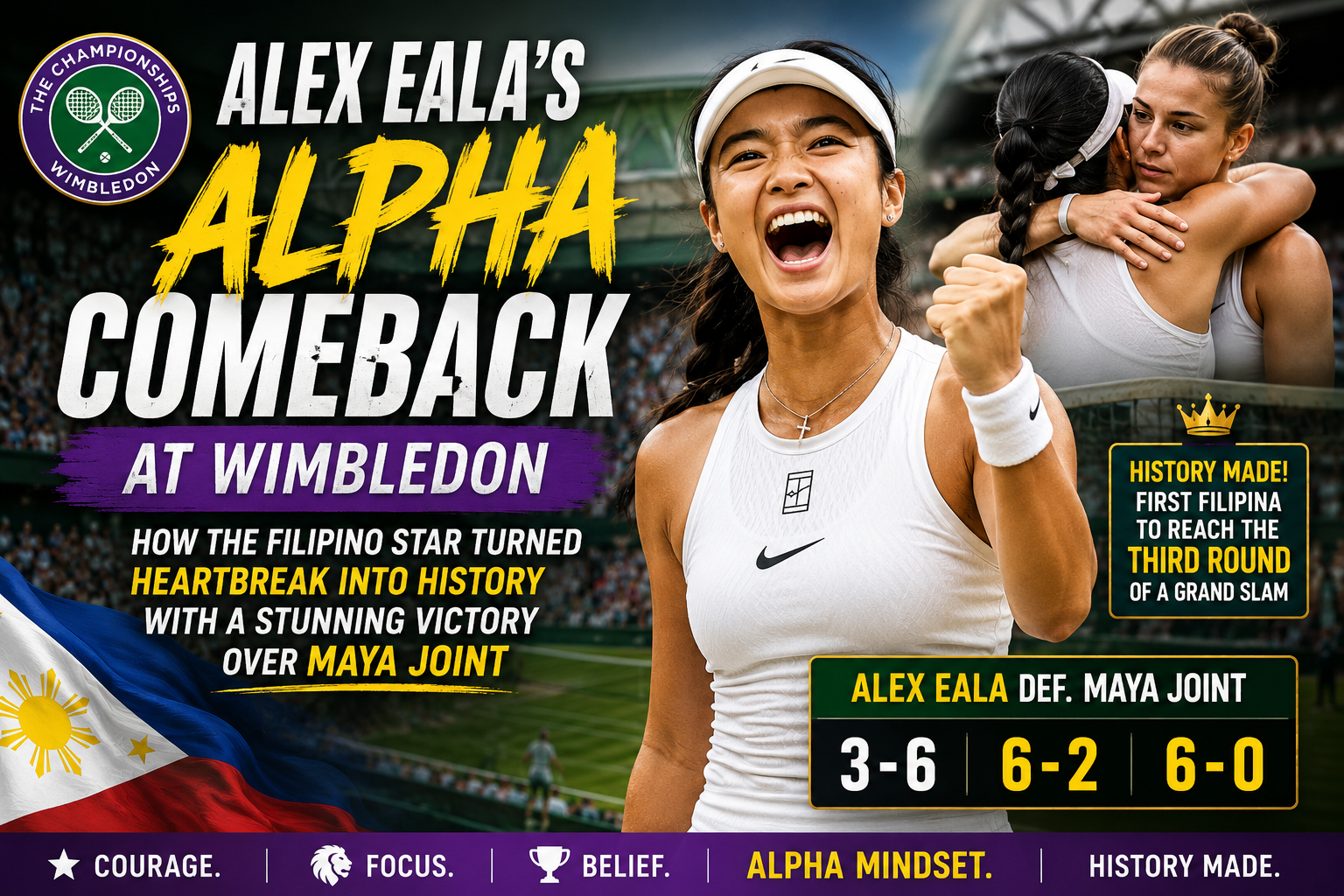
That was exactly the story on display as Alex Eala produced one of the biggest victories of her young professional career, defeating Maya Joint 3-6, 6-2, 6-0 in the second round of The Championships, Wimbledon.
For casual fans, the scoreline looked impressive.
For ATP coaches, sports psychologists, and elite competitors, the match revealed something much deeper.
It showcased the birth of an Alpha competitor.
This wasn't simply about better forehands or stronger serves.
It was about emotional control.
It was about tactical evolution.
It was about refusing to allow yesterday's heartbreak to define today's opportunity.
One year earlier, Eala had walked off court in tears after narrowly losing the Eastbourne final to Joint. Many young players carry those emotional scars into future meetings.
Champions use them as fuel.
On the lawns of the All England Club, Eala completely rewrote the narrative.
Final Score
Alex Eala def. Maya Joint
3-6, 6-2, 6-0
From dropping the opening set to completely dominating the final six games, Eala delivered one of the most impressive momentum shifts seen during the opening week of Wimbledon.
Why This Match Matters Far Beyond One Victory
Every Grand Slam contains breakthrough moments.
Some players announce themselves with power.
Others with shot-making.
Others through resilience.
Eala announced herself through adaptation.
The victory also carried historic significance.
She became the first Filipina ever to reach the third round of a Grand Slam singles tournament, a landmark achievement for Philippine tennis and an inspiration for a new generation of players.
For ATP coaches, that achievement reflects years of disciplined development rather than one magical afternoon.
Set One: Maya Joint Controlled the Tempo
The opening set belonged largely to Joint.
Fresh from one of the tournament's biggest upsets, the Australian entered the match playing fearless tennis.
She struck first.
She dictated rallies.
She attacked second serves.
She pushed Eala behind the baseline.
Most importantly, she played with confidence.
Winning the opening set 6-3 wasn't accidental.
Joint was taking the ball early and forcing Eala to defend rather than create.
When an aggressive baseliner establishes rhythm on grass, opponents often struggle to regain control.
At this point, many younger players begin forcing low-percentage winners.
Eala chose another path.
She started solving the puzzle.
The Alpha Adjustment
Elite tennis is a sport of adjustments.
Winning players constantly gather information.
Instead of panicking after losing the first set, Eala quietly changed several tactical elements.
She increased the depth of her groundstrokes.
She reduced unnecessary risks.
She targeted safer margins over the net.
She extended rallies when necessary.
She began attacking shorter balls rather than attempting spectacular winners from defensive positions.
These are championship decisions.
Not emotional decisions.
ATP coaches frequently describe this as "playing the percentages."
Instead of trying to end rallies in three shots, Eala trusted her movement, consistency, and court intelligence.
That decision changed the entire match.
Set Two: Momentum Completely Shifted
Once Eala settled into her rhythm, the match looked dramatically different.
Her forehand became heavier.
Her backhand found greater depth.
Her return positioning improved.
Most importantly, she started dictating where rallies were played.
Joint suddenly found herself reacting rather than attacking.
This subtle tactical reversal often determines matches at the professional level.
Instead of running Eala side to side, Joint was now defending wide angles herself.
The scoreboard reflected that change.
Eala captured the second set 6-2.
Momentum had completely shifted.
Mental Toughness Won the Match
The final score might suggest an easy deciding set.
It wasn't.
Several early games featured extended deuces.
Those moments were actually the turning points.
Champions understand that matches are often decided not by spectacular winners but by a handful of critical points.
During those marathon games, Eala remained composed.
She trusted her patterns.
She avoided panic.
She made Joint earn every point.
Winning those pressure-filled games broke the Australian's confidence.
Once that happened, the floodgates opened.
Set Three: Total Alpha Tennis
The final set finished 6-0.
In tennis language, that's called a "bagel."
But the score alone doesn't explain what happened.
Eala's confidence continued growing with every point.
Joint, meanwhile, began pressing harder.
When players begin forcing winners too early, mistakes multiply.
That is exactly what Eala wanted.
Rather than chasing highlight shots, she kept constructing points patiently.
Her court positioning improved.
Her first-strike tennis became more efficient.
Her movement remained explosive.
Her decision-making stayed disciplined.
This is what ATP coaches often call "professional maturity."
The Difference Between Confidence and Belief
Confidence depends on recent results.
Belief survives difficult moments.
Eala lost the first set.
She had every reason to doubt herself.
Instead, she relied on belief built through years of training.
This distinction separates elite competitors from talented players.
Confidence rises and falls.
Belief remains.
During the third set, Eala wasn't playing emotionally.
She was executing.
Turning Heartbreak Into Fuel
One of the most compelling aspects of this victory was its emotional backdrop.
Last season, Joint defeated Eala in a heartbreaking Eastbourne final.
That loss visibly affected the Filipina.
Many athletes carry emotional baggage into rematches.
Eala carried experience instead.
Rather than seeking revenge, she sought improvement.
Every rally reflected lessons learned from their previous meeting.
This is the hallmark of elite competitors.
They don't simply remember defeats.
They study them.
Tactical Areas That Changed Everything
From an ATP coaching perspective, several improvements stood out.
Better Rally Depth
Grass rewards players who keep opponents deep behind the baseline.
Eala consistently increased her average shot depth after the opening set.
That prevented Joint from attacking comfortably.
Smarter Shot Selection
Instead of chasing difficult winners, Eala patiently built points.
She waited for higher-percentage opportunities.
That dramatically reduced unforced errors.
Improved Return Position
Reading Joint's serve more effectively allowed Eala to neutralize the Australian's first strike.
This prevented Joint from controlling easy service games.
Superior Movement
Despite the slippery grass surface, Eala moved with outstanding balance.
Efficient footwork allowed her to recover quickly after aggressive shots.
Emotional Stability
Perhaps most importantly, Eala never appeared rushed.
Even after losing long rallies, her body language remained positive.
Elite competitors understand that emotional energy influences physical performance.
Why Grass Rewards Intelligent Players
Many fans believe grass courts favor only powerful servers.
Modern Wimbledon tells a different story.
Grass rewards:
- Fast decision-making
- Efficient movement
- Precise court positioning
- Low, penetrating groundstrokes
- Excellent anticipation
Eala demonstrated each of those qualities throughout the final two sets.
Rather than overpowering Joint, she out-thought her.
The Alpha Mindset
Sports psychologists frequently discuss "Alpha performance."
This has nothing to do with arrogance.
It means embracing responsibility during pressure.
Alpha competitors:
- Stay calm after setbacks.
- Solve problems instead of complaining.
- Adapt faster than opponents.
- Trust preparation.
- Execute under pressure.
- Control emotions.
- Finish strongly.
Eala displayed every one of those characteristics.
The third set was not emotional revenge.
It was disciplined execution.
Historic Significance for Philippine Tennis
Every nation experiences moments that redefine belief.
For the Philippines, this victory represents one of those moments.
Young Filipino players watching Wimbledon now have tangible proof that reaching the latter stages of Grand Slam tournaments is achievable.
Representation matters.
Every breakthrough expands what future generations believe is possible.
Eala's success will likely inspire increased participation in junior tennis, stronger investment in player development, and greater international attention on Philippine tennis.
The Physical Demands of the Comeback
Coming back after losing the opening set requires more than technical ability.
Players must manage:
- Physical fatigue
- Heart rate
- Adrenaline
- Decision-making
- Muscle recovery between points
- Emotional control
As rallies became longer, Eala actually appeared fresher.
That reflects outstanding conditioning.
Professional fitness isn't only about running.
It's about maintaining decision quality after two hours of intense competition.
Lessons Every Tennis Player Can Learn
Regardless of playing level, this match offers valuable lessons.
Don't Panic After Losing a Set
Professional matches often change dramatically.
Stay patient.
Adjust Before Swinging Harder
Winning rarely comes from simply hitting harder.
Small tactical adjustments often produce bigger improvements.
Win the Small Battles
Break points.
Deuce games.
Second serves.
These moments determine matches.
Body Language Matters
Confidence influences opponents.
Positive posture communicates belief.
Trust Preparation
Elite players don't invent new games during pressure.
They trust training.
Next Challenge: Iga Świątek
Eala's reward is one of the biggest tests in professional tennis.
She now faces defending Wimbledon champion and World No. 3 Iga Świątek.
For many players, that challenge could feel overwhelming.
For Eala, it represents another opportunity.
Matches against the world's best accelerate development.
Regardless of the outcome, this experience provides invaluable lessons about competing against the sport's elite.
Świątek combines relentless consistency, exceptional movement, and tactical discipline. Eala will need to maintain the aggressive yet patient balance she displayed against Joint while taking advantage of every short ball and protecting her own service games.
An ATP Coach's Final Analysis
Watching this match from a coaching perspective, one conclusion stands above everything else.
Alex Eala did not win because Maya Joint suddenly played poorly.
She won because she evolved faster.
She solved tactical problems.
She stayed emotionally composed.
She trusted her game.
She executed under pressure.
Those qualities define elite tennis.
The 3-6, 6-2, 6-0 scoreline tells only part of the story.
The deeper story is about resilience.
About learning from defeat.
About refusing to let painful memories become permanent limitations.
Championship careers are rarely built on perfect performances.
They are built on courageous adjustments.
On the grass courts of Wimbledon, Alex Eala delivered exactly that.
She transformed disappointment into determination, pressure into precision, and opportunity into history.
Whether this run continues deep into the tournament or not, one thing has become increasingly clear to tennis fans and ATP coaches alike:
Alex Eala is no longer simply one of the sport's brightest prospects.
She is becoming a genuine Grand Slam contender with the mindset, tactical intelligence, and competitive resilience required to challenge the very best on tennis's biggest stages.