
The tennis world has always respected talent. But the sport remembers something even more powerful: resilience.
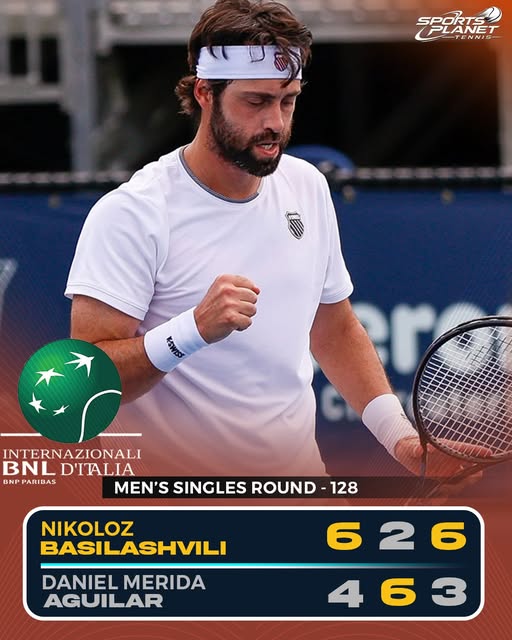
That is why the victory of Nikoloz Basilashvili over Daniel Mérida Aguilar at the 2026 Italian Open felt bigger than a routine first-round result. The scoreline — 6-4, 2-6, 6-3 — only told part of the story. Beneath the numbers was a player fighting to rebuild confidence, identity, rhythm, and belief on one of tennis’ grand clay stages.
For Basilashvili, this was not merely his first ATP-level victory of the season.
It felt like the beginning of a resurrection.
The former top-level shotmaker from Georgia arrived in Rome carrying the weight of difficult seasons, inconsistent performances, ranking struggles, and emotional pressure that many fans never fully see. Yet on the clay courts of the Italian Open, something looked different. The body language changed. The decision-making sharpened. The emotional reactions stabilized. Most importantly, the hunger returned.
From the perspective of many American coaches and analysts, this match was less about rankings and more about psychological reconstruction.
Rome may become the place where Basilashvili remembered who he truly is as a competitor.
A Match That Shifted Momentum
At first glance, the contest against Daniel Mérida Aguilar looked dangerous for Basilashvili.
Aguilar represented youth, movement, and fearless energy. Young clay-court players often bring relentless topspin, patience, and physical endurance that can frustrate experienced hitters. Early in the match, Aguilar attempted to drag Basilashvili into longer exchanges, forcing him to defend uncomfortable angles and hit extra balls.
Historically, this has been one of Basilashvili’s biggest challenges during difficult periods of his career.
When his timing disappears, his aggressive style can quickly collapse into rushed shot selection and emotional frustration.
But in Rome, the adjustment process looked smarter.
Instead of trying to hit winners from impossible positions, Basilashvili managed points with more discipline. He still attacked aggressively, but the aggression came with structure. He chose higher-percentage forehands before flattening out the final strike. He used deeper returns to gain neutral positioning instead of immediately forcing low-percentage attacks.
That tactical patience changed the flow of the match.
According to many USA-based tennis coaches, comeback seasons are rarely about technique alone. The technical level often already exists. The real battle happens between the ears.
Basilashvili’s emotional control became one of the most important developments in this victory.
The Emotional IQ Shift Before the Comeback
Elite tennis players often talk about confidence, but emotional IQ inside matches is equally critical.
Emotional IQ in tennis means understanding momentum, recognizing emotional spikes, controlling panic, and making smart decisions under stress. Players with low emotional stability may possess incredible talent yet repeatedly lose control during pressure moments.
For several seasons, Basilashvili struggled with emotional turbulence during matches.
When errors piled up, frustration visibly affected his shot tolerance. Points became rushed. Risk management disappeared. Tactical discipline faded. Opponents sensed the instability and extended rallies intentionally.
Against Aguilar, the old pattern briefly appeared in the second set.
After winning the opener 6-4, Basilashvili’s level dipped sharply. Errors increased. Footwork slowed. Aguilar sensed opportunity and began dictating with confidence, taking the second set 6-2.
In previous months, that moment could have triggered a complete collapse.
Instead, Basilashvili responded differently.
This was perhaps the most important sign of growth.
Rather than emotionally spiraling after losing momentum, he reset mentally before the third set. He shortened emotional reactions after mistakes. He walked with calmer posture between points. He focused on first-strike tennis instead of overhitting.
That is the hidden detail many casual fans miss.
The comeback did not start in the third set.
It started with emotional regulation.
Tactical Adjustments That Changed the Match
Several tactical adjustments became visible as the match progressed.
1. Smarter Forehand Construction
Earlier in his career, Basilashvili often relied on pure power from the first ball. In Rome, he built points more patiently.
Instead of instantly flattening the forehand, he used heavier topspin early in rallies before accelerating down the line later. This allowed him to push Aguilar deeper behind the baseline.
That extra depth created shorter reply balls.
Once Basilashvili stepped inside the court, his natural offensive instincts became devastating again.
2. Improved Serve Placement
His serve patterns also became more intelligent during critical moments.
Rather than simply chasing aces, he targeted body serves effectively on clay. This disrupted Aguilar’s rhythm and limited aggressive returns.
American coaches frequently emphasize that clay-court serving is about positioning more than speed. Basilashvili executed that principle well during the deciding set.
3. Better Rally Tolerance
Perhaps the biggest improvement involved rally patience.
Prime Basilashvili has always been dangerous when balanced emotionally because his raw ball-striking can overwhelm nearly anyone. But clay requires tolerance. Players must survive extended exchanges before finding attack opportunities.
Against Aguilar, Basilashvili finally accepted longer points instead of forcing reckless winners too early.
That patience became a major difference maker.
Why Rome Matters So Much
The Italian Open is not just another ATP event.
Italian Open represents one of the sport’s most historic clay tournaments. Rome tests endurance, movement, tactical intelligence, and emotional resilience before Roland Garros.
Winning in Rome carries psychological significance because the conditions expose weaknesses brutally.
There is nowhere to hide on slow clay courts.
If your legs are uncertain, opponents expose it.
If your confidence is unstable, rallies reveal it.
If your emotional discipline breaks, momentum disappears quickly.
That is why Basilashvili’s victory matters more than rankings points alone.
He won a mental battle in one of the hardest environments in tennis.
The Importance of First ATP-Level Wins
Athletes often describe first victories after difficult stretches as emotionally overwhelming.
To fans, one win may seem small.
To players, it can feel life-changing.
The first ATP-level victory of the season breaks psychological barriers. It interrupts negative internal narratives. It reminds competitors they still belong.
Tennis is deeply individual. There are no teammates to absorb pressure during difficult periods. Every ranking drop, every loss, and every criticism becomes personal.
For Basilashvili, months of frustration likely accumulated before arriving in Rome.
That is why his reaction after key points looked intense.
He was not celebrating one match.
He was fighting to recover identity.
USA Coach Perspective: Rebuilding a Dangerous Player
Many American tennis analysts believe Basilashvili remains one of the most dangerous unseeded players in the world when emotionally stable.
The reason is simple: few players strike the ball as violently from both wings.
At his peak, Basilashvili could overpower elite opponents with relentless baseline aggression. His ability to redirect pace early off the bounce made him incredibly uncomfortable to face.
However, modern tennis punishes emotional inconsistency quickly.
Top American coaches frequently emphasize three comeback pillars:
- Emotional stability
- Physical trust
- Tactical simplicity
Rome showcased progress in all three areas.
Emotional Stability
Basilashvili avoided emotional implosion after losing the second set.
Physical Trust
His movement remained committed during long rallies late in the match.
Tactical Simplicity
He avoided overcomplicating points and trusted heavy baseline fundamentals before attacking.
Those are foundational signs of rebuilding.
Daniel Mérida Aguilar Also Showed Promise
Although Basilashvili earned the spotlight, Daniel Mérida Aguilar demonstrated why many believe he has a strong future on clay.
The young Spaniard competed fearlessly and showed excellent court coverage throughout the match. His second-set response reflected maturity and confidence under pressure.
Spanish clay-court development continues producing players with outstanding movement and tactical patience. Aguilar’s ability to absorb pace and extend rallies forced Basilashvili into uncomfortable situations repeatedly.
From a coaching perspective, Aguilar’s composure during momentum swings stood out positively.
Despite the loss, matches like this become valuable developmental experiences for younger players.
Facing former elite-level shotmakers teaches critical lessons about pace management and point construction.
The Psychological Weight of Comebacks
Sports fans love comeback stories because they reflect universal human struggles.
Athletes at the highest level face invisible battles constantly:
- self-doubt
- fear of decline
- pressure from rankings
- criticism from media
- physical exhaustion
- emotional burnout
When players lose repeatedly, confidence erosion becomes dangerous.
Even simple decisions inside points become uncertain.
Should I attack?
Should I defend?
Should I trust my forehand?
Should I change direction?
Hesitation destroys elite tennis.
Against Aguilar, Basilashvili finally played with greater conviction again.
Not perfection.
Conviction.
There is a major difference.
Clay Court Tennis Rewards Patience
One fascinating aspect of this victory was how Basilashvili adapted his natural aggression to clay conditions.
Clay courts reward players who balance patience with controlled offense.
American hard-court tennis often emphasizes direct attacking patterns. Clay forces players to construct points carefully. Impulsive aggression becomes risky because movement and bounce slow down the court.
In Rome, Basilashvili displayed improved clay-court maturity.
He used shape before power.
Depth before angles.
Control before chaos.
That strategic evolution could become essential if he wants sustained success during the European clay season.
Can This Spark a Bigger Run?
The biggest question now is whether this victory becomes an isolated moment or the beginning of a larger comeback trajectory.
Momentum in tennis can shift rapidly.
One strong ATP run can restore ranking points, confidence, and belief simultaneously. Suddenly draws become less intimidating. Practice quality improves. Decision-making sharpens.
For Basilashvili, the key will be emotional consistency over multiple matches.
Elite players rarely maintain top form every day. What separates successful veterans is the ability to survive imperfect performances without mentally collapsing.
Rome offered encouraging evidence.
Even after momentum swung away in the second set, Basilashvili stayed connected emotionally and tactically.
That resilience may become more important than raw power moving forward.
The Hidden Role of Experience
Veteran players often possess advantages younger opponents underestimate.
Experience teaches:
- how to slow momentum swings
- how to manage energy
- how to recover emotionally between sets
- how to simplify tactics under pressure
Basilashvili used those lessons effectively in the deciding set.
Instead of panicking after losing control, he trusted foundational patterns and gradually reclaimed scoreboard pressure.
Experienced competitors understand that matches rarely remain emotionally stable.
Momentum always shifts.
The winners are usually those who handle chaos better.
The Crowd Energy in Rome
Italian Open crowds create unique emotional atmospheres.
Rome fans appreciate passion, intensity, and dramatic momentum swings. Players who show emotional investment often receive tremendous crowd support.
As Basilashvili regained control in the third set, the atmosphere visibly energized him.
Crowd momentum matters deeply in comeback situations because emotional energy can temporarily elevate confidence and physical intensity.
Veteran players know how to absorb that energy productively.
Basilashvili appeared emotionally connected to the environment rather than overwhelmed by it.
That was another positive sign.
The Bigger Picture of 2026
Tennis in 2026 continues evolving rapidly with younger generations pushing physical and tactical standards higher.
Veteran players trying to rebuild careers face enormous pressure because the sport becomes faster and deeper each season.
That makes Basilashvili’s Rome victory meaningful beyond one tournament.
It demonstrated adaptation.
He did not attempt to win solely through reckless power. He blended aggression with emotional intelligence and tactical restraint.
Modern tennis increasingly rewards complete competitors rather than pure shotmakers.
If Basilashvili continues developing emotional discipline alongside his natural explosiveness, he could become a dangerous spoiler throughout the season.
What Comes Next
The challenge after emotional victories is maintaining balance.
Many players experience emotional crashes after breakthrough wins because adrenaline and relief drain mental energy quickly.
The next matches become critical.
Can Basilashvili maintain composure?
Can he continue constructing points patiently?
Can he trust disciplined aggression instead of reverting to desperation tennis?
Those questions will define whether Rome becomes a turning point or simply a memorable moment.
Still, something important changed during this match.
The fire looked real again.
Final Thoughts
Nikoloz Basilashvili’s victory over Daniel Mérida Aguilar at the Italian Open was not merely about advancing to the next round.
It was about rediscovering competitive identity.
The scoreline reflected resilience.
The adjustments reflected maturity.
The emotional control reflected growth.
For months, Basilashvili searched for stability and rhythm inside one of the world’s toughest sports. In Rome, fans witnessed signs that the rebuilding process may finally be moving forward.
Great comebacks rarely begin with perfection.
They begin with belief.
On the clay courts of Rome, Basilashvili found that belief again.