
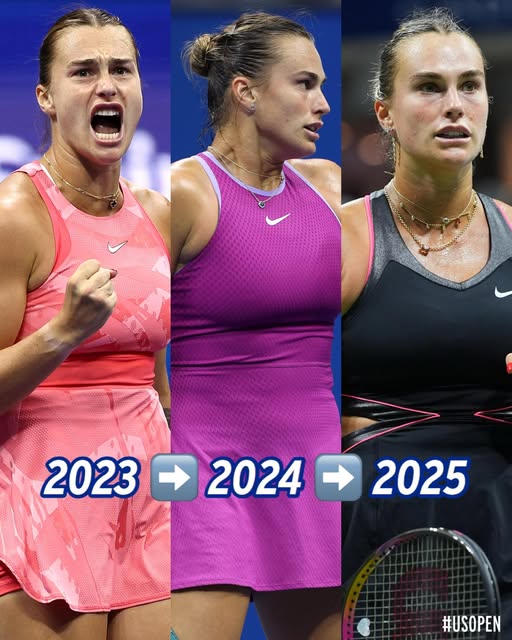
Analysis: Aryna Sabalenka isn't just winning points; she's winning the war of attrition before it even begins, one thunderous strike at a time.
NEW YORK — There is a moment in an Aryna Sabalenka match, often early in the first set, that has become as predictable as a New York sunset. It’s not marked by a winner or an error, but by a subtle, almost imperceptible reaction from the woman standing across the net. A slight wince after returning a forehand. A hurried, almost desperate flick of the wrist on what should be a routine backhand. It’s the look of a player who knows they are not just in a tennis match, but are being subjected to a sustained physical assault.
This is the hidden victory within Sabalenka’s dominant run. Her explosive stroke isn't just a tool to win points; it's a strategic weapon designed to weaken, demoralize, and ultimately break her opponents.
We talk about power in tennis in terms of mph and winners. But the true metric of Sabalenka’s game is the gradual degradation of her opponent’s fundamentals. The serve that starts at 120 mph is terrifying. But the cumulative effect of returning 50 of them is exhausting. It shortens the swing. It creates hesitation. The booming return of serve doesn’t just steal a point; it plants a seed of doubt that grows with every subsequent serve. "Can I hit it deep enough? Will she crush it if I don't?"
This is familiar territory for the World No. 1. She has built her empire on this very principle. Her game is a battering ram. Early rounds, quarterfinals, semifinals—the script remains the same. She steps onto the court and immediately begins establishing her authority from the baseline. The first few games are a feeling-out process in the most violent sense possible. She is measuring her opponent’s resistance, testing their resolve, and firing shots that echo through the stadium and, more importantly, resonate in her opponent’s arm.
By the mid-point of the first set, the strategy is already taking hold. The opponent’s feet are a fraction of a second slower. Their preparation is rushed. They begin going for too much on their own shots, attempting improbable winners from impossible positions, simply because engaging in a long rally feels like a losing proposition. Sabalenka’s power forces errors that aren’t forced by the situation, but by the sheer psychological and physical pressure she exerts.
And now, she is moving to get another new record high. This isn’t just about defending a title or adding another Grand Slam to her collection. It’s about cementing a legacy defined by a specific, awe-inspiring brand of tennis. Each victory powered by this method pushes her higher in the history books. She is not merely playing opponents; she is overwhelming them, using a blueprint of controlled violence that has become her unmistakable signature.
The final will be the ultimate test of this philosophy. Can she once again impose her will, land the first blow, and weaken the foundations of another elite player’s game from the very first ball? If the familiar pattern holds, the result will be the same: a victory forged not just in skill, but in the relentless, explosive force of her will.