Match Context: The Missed Finish
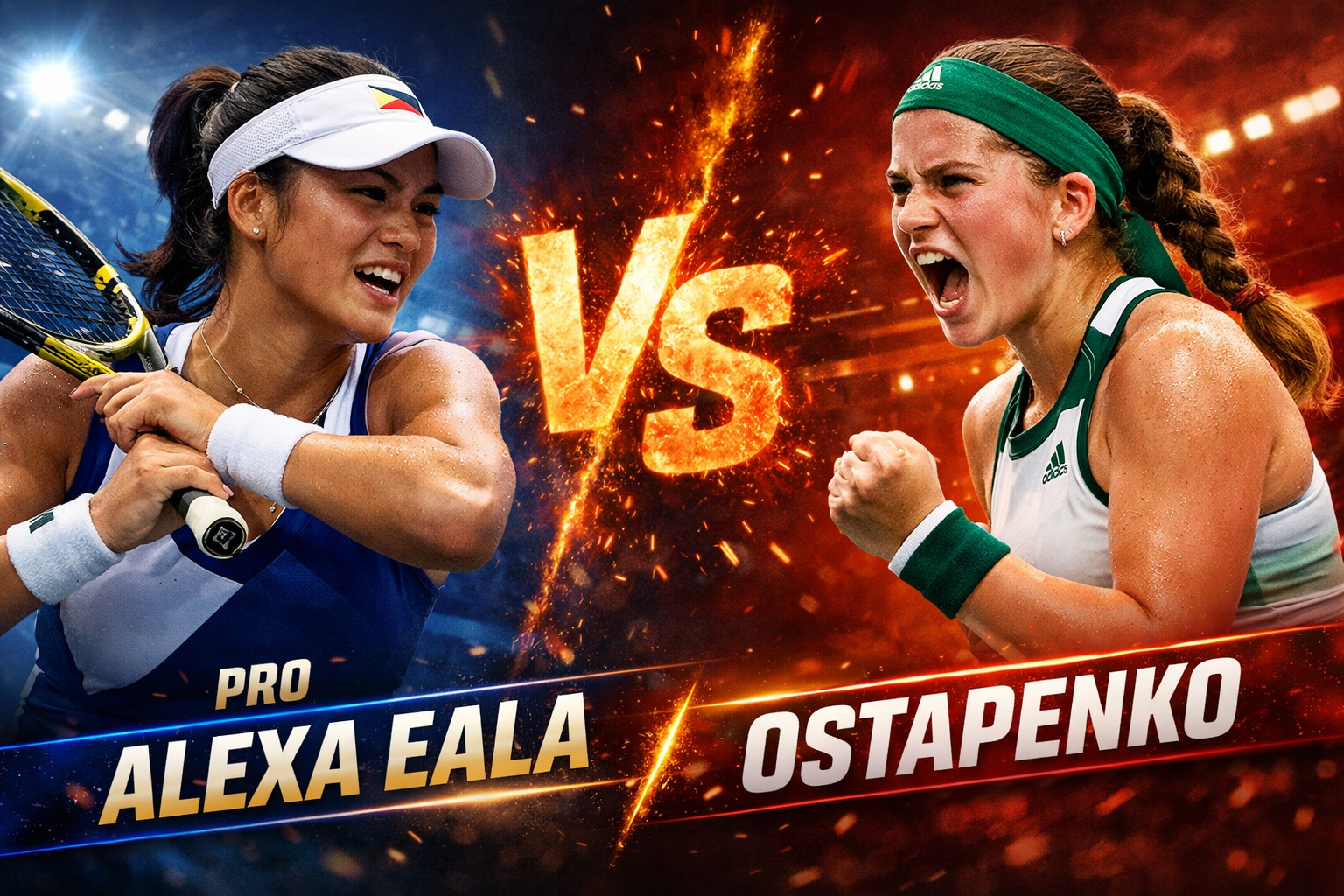
Alex Eala led 5–1 in the second set against Jelena Ostapenko.
One game away from forcing a decider, the situation was ideal.
But instead of closing, the match flipped. Ostapenko won six consecutive games.
This moment reveals the difference between competing well and finishing like a professional.
The Reality of Closing a Set
Closing is not just about skill—it is a combination of:
- Physical readiness
- Mental clarity
- Tactical precision
- Fighting spirit
At 5–1, pressure increases, not decreases. The body tightens, the mind speeds up, and execution becomes more difficult.
Body Condition: The Hidden Factor in Endgame Performance
As the set approaches its end, physical condition plays a major role.
What Happens Physically:
- Legs become heavier
- Reaction time slows
- Timing becomes less precise
- Energy drops slightly
Even a small decline affects:
- Shot depth
- Footwork positioning
- Recovery speed
In This Match:
Alex Eala showed signs of:
- Slightly shorter shots
- Reduced explosiveness
- Less aggressive court positioning
Meanwhile, Jelena Ostapenko maintained:
- High intensity
- Explosive shot-making
- Strong physical commitment
Fighting Spirit: The Deciding Edge
Closing a set requires more than control—it requires intent to finish.
What Defines Fighting Spirit:
- Willingness to take risks
- Commitment to every shot
- Refusal to play safe
Ostapenko demonstrated:
- Full commitment to aggression
- Confidence under pressure
- Relentless attacking mindset
Eala, in contrast:
- Became slightly cautious
- Reduced shot aggression
- Played to maintain the lead
This shift is critical.
Tactical Breakdown: Why the Lead Disappeared
1. No Shift in Closing Strategy
At 5–1, the strategy must evolve.
Eala continued:
- Baseline exchanges
- Neutral rally patterns
Professional closing requires:
- Shorter points
- Early ball striking
- Clear finishing intent
2. Failure to Control Court Position
Closing players:
- Step inside the baseline
- Take time away from opponent
Eala:
- Stayed neutral or slightly defensive
- Allowed Ostapenko to dictate
3. Lack of Variation
Ostapenko thrives on rhythm.
Missing adjustments:
- High topspin to push back
- Slice to break timing
- Change in height and depth
Without variation, the opponent gains confidence.
4. No Tempo Management
When momentum shifts, tempo must be controlled.
Missing actions:
- Slowing down between points
- Resetting breathing
- Breaking opponent rhythm
What Pros Do Differently When Closing
Top players follow clear closing principles:
1. Increase Aggression, Not Reduce It
They take control earlier in rallies.
2. Simplify Decision-Making
They rely on 1–2 trusted patterns.
3. Play with Forward Intent
They move inside the court and finish points.
4. Maintain Physical Intensity
They do not drop energy levels.
Innovation Concept: Closing Strength Index (CSI)
This match highlights a key performance metric opportunity.
Closing Strength Index (CSI)
Measures:
- Success rate when leading
- Shot aggression in closing games
- Physical intensity level
- Conversion of set points or game leads
Eala in this match:
- Strong build-up
- Weak closing conversion
This metric can be used for:
- Match analysis
- Player development tracking
- Content differentiation for your site
Game Adoption: How Eala Can Improve Closing Ability
Physical Conditioning for Endgame
- Train endurance under fatigue
- Practice explosive movement late in sessions
Closing Scenario Training
- Repeatedly practice 5–3, 5–4 situations
- Focus on finishing patterns
Fighting Spirit Development
- Train aggressive mindset under pressure
- Reward attacking decisions, not safe play
Pre-Defined Closing Patterns
Example:
- Strong serve + first attack
- Deep crosscourt + inside-out finish
Key Lesson: Closing Requires a Different Identity
Playing well is one level.
Closing a set requires becoming:
- More aggressive
- More decisive
- More committed
At 5–1, the player must shift from:
- Competing
to:
- Finishing
Final Analysis
Alex Eala had the match within reach.
But against Jelena Ostapenko, maintaining level is not enough.
The difference was:
- Physical intensity
- Tactical adjustment
- Fighting spirit in key moments
Closing Thought
Tennis rewards players who rise at the finish.
Not those who protect the lead—but those who attack the ending.