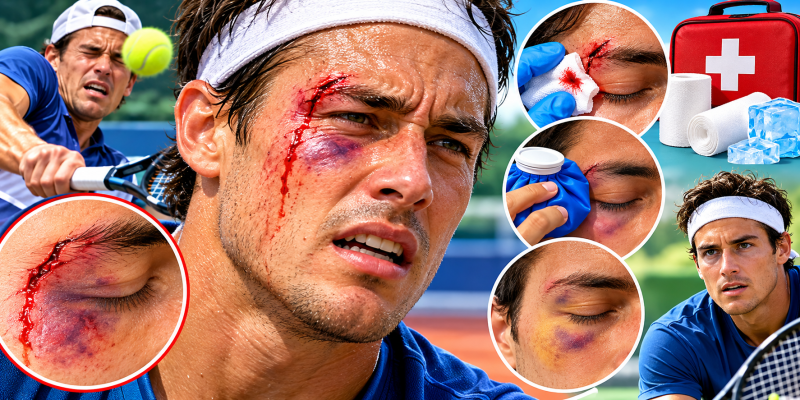
Facial cuts and bruises are traumatic injuries that can occur during tennis matches, training sessions, and close-range doubles play. A fast-moving tennis ball, accidental racket contact, collision with court equipment, or a fall onto a hard court can damage the skin and underlying soft tissues.
From a tennis sports medicine perspective, facial injuries deserve careful attention. The face contains many small blood vessels, so even a relatively small cut can bleed significantly. Blunt impacts may also cause swelling, bruising, facial fractures, eye injuries, or concussion.
Although many superficial cuts and bruises heal with appropriate care, players should not assume that every facial injury is minor. Uncontrolled bleeding, suspected fractures, eye injuries, and symptoms of concussion require prompt medical assessment.
Quick Overview: Facial Injuries in Tennis
-
Common injuries: Facial cuts, abrasions, bruises, swelling, and hematomas.
-
Typical causes: Tennis ball impacts, racket collisions, falls, and contact with court fixtures.
-
Early symptoms: Pain, bleeding, tenderness, redness, and swelling.
-
Possible complications: Infection, scarring, facial fractures, dental injuries, and concussion.
-
First aid: Control bleeding, gently clean superficial wounds, and apply a wrapped cold pack to bruised areas.
-
Prevention: Improve court awareness, maintain safe spacing, and use suitable footwear.
-
Return to tennis: Resume activity when the wound is stable, symptoms have improved, and any significant injury has been medically assessed.
What Causes Facial Cuts and Bruises in Tennis?
Tennis requires fast reactions, explosive movement, and constant awareness of the ball, opponents, and doubles partners. During intense exchanges, an unexpected impact can occur before a player has time to protect the face.
1. Direct Impact From a Tennis Ball
A powerful serve, groundstroke, or volley can strike the forehead, cheek, nose, lips, or area around the eye. Depending on the speed and location of impact, the injury may range from superficial redness to substantial swelling or deeper tissue damage.
2. Accidental Racket Contact
Racket-to-face injuries can occur when doubles partners move toward the same ball, during close net exchanges, or while practicing overhead shots.
A racket frame can cause a cut, while a blunt impact may result in bruising or a facial fracture.
3. Falls on the Court
Slipping while changing direction or chasing a difficult shot can cause a player to land on the face or strike the head against the court surface.
Hard-court falls may produce abrasions, cuts, swelling, and injuries to the teeth or jaw.
4. Collisions With Court Equipment
Net posts, fences, umpire chairs, and other court fixtures can cause facial trauma when players move backward or sideways without sufficient awareness of their surroundings.
Types of Facial Injuries in Tennis Players
Facial Cuts and Lacerations
A laceration is a break in the skin that may range from a small superficial cut to a deep wound.
Common locations include the forehead, eyebrow, nose, cheek, and lips. Deeper wounds may require stitches, medical adhesive, or another method of closure to support proper healing and reduce scarring.
Cuts involving the eyelid margin, lip border, nose, or areas near important nerves may need specialist assessment.
Facial Bruises and Contusions
A bruise occurs when small blood vessels break beneath the skin following blunt trauma.
Symptoms may include:
-
Red, purple, blue, or darkened skin.
-
Tenderness around the impact site.
-
Mild to moderate swelling.
-
Pain when touching or moving the affected area.
Bruising may change color over several days as the body gradually breaks down and reabsorbs blood beneath the skin.
Hematomas
A hematoma is a collection of blood outside blood vessels that can produce a localized swelling or lump.
A rapidly enlarging facial hematoma, severe pain, or swelling near the eye should be assessed urgently, especially after a powerful impact.
Facial Abrasions
Abrasions occur when the skin scrapes against the court surface. They may contain grit, dust, or other debris.
Cleaning superficial abrasions promptly helps remove contamination and reduce infection risk.
Symptoms: When Is a Facial Injury Serious?
The appearance of an injury does not always reflect its severity. Check for both visible damage and symptoms that may indicate deeper trauma.
Common Symptoms
-
Bleeding from a cut.
-
Localized pain and tenderness.
-
Swelling around the forehead or cheeks.
-
Bruising around the nose or eye.
-
Superficial skin abrasions.
-
Temporary discomfort when chewing or moving the jaw.
Warning Signs Requiring Urgent Medical Attention
Seek urgent assessment if the player has:
-
Bleeding that does not stop with sustained direct pressure.
-
A deep, gaping, or contaminated wound.
-
Severe facial pain or suspected bone deformity.
-
Double vision, reduced vision, or difficulty moving an eye.
-
A loose, displaced, or broken tooth.
-
Difficulty breathing or opening the mouth.
-
Numbness of the face following a significant impact.
-
Increasing swelling around the eye or cheek.
Possible Concussion Symptoms
A blow to the face may also transmit force to the head.
Warning signs include headache, dizziness, confusion, memory problems, balance difficulties, nausea, or unusual behavior.
Loss of consciousness, repeated vomiting, seizures, worsening headache, increasing confusion, or difficulty waking requires emergency evaluation.
If concussion is suspected, remove the player from activity immediately and do not allow a same-day return to tennis.
Immediate First Aid for Facial Cuts and Bruises
Step 1: Stop Playing and Assess the Injury
Move away from active play and check whether the player is alert, breathing normally, and able to respond appropriately.
If the impact involved the head, assess for signs of concussion and other serious injuries. Call emergency services if there are severe symptoms.
Step 2: Control Bleeding
For an uncomplicated facial cut, use clean gauze or a clean cloth to apply steady, direct pressure for approximately 10 minutes without repeatedly lifting it to inspect the wound.
If blood soaks through, add another layer without removing the original dressing.
Do not press directly on an injured eyeball, an embedded object, or an area where a skull or facial fracture is suspected. Seek emergency assistance for serious injuries or bleeding that cannot be controlled.
Step 3: Clean Superficial Wounds
Once bleeding is controlled, gently rinse a minor cut or abrasion with clean running water or sterile saline.
Remove loose surface debris carefully, but do not dig into the wound to extract deeply embedded material. Deep, contaminated, or gaping wounds require professional cleaning and assessment.
Avoid pouring harsh antiseptics into the wound.
Step 4: Reduce Swelling
For a closed bruise without signs of a fracture or serious eye injury, apply a cold pack wrapped in a cloth for 10–20 minutes at a time.
Never apply ice directly to the skin. Avoid strong pressure, particularly around the eye, nose, or cheekbone.
Step 5: Seek Medical Care When Necessary
A healthcare professional should assess deep or gaping cuts, wounds involving the lips or eyelids, persistent bleeding, suspected fractures, and injuries with possible eye or dental involvement.
Facial wounds may benefit from early closure to optimize healing and appearance. A clinician can determine whether stitches, adhesive, or another treatment is appropriate.
Check tetanus vaccination status after a skin-breaking injury, particularly if the wound is contaminated.
How Doctors Assess Facial Trauma
A medical assessment may include several steps, depending on the mechanism of injury and symptoms.
1. Wound Examination
The clinician evaluates the depth, location, contamination, and extent of the wound and checks whether underlying structures may be involved.
2. Facial Bone Assessment
Tenderness, abnormal movement, deformity, changes in sensation, or difficulty opening the mouth may suggest a fracture.
Imaging, such as a CT scan, may be necessary when a significant facial or orbital fracture is suspected.
3. Eye and Dental Assessment
A direct impact near the eye may require an eye examination, while injuries involving the mouth or jaw may need dental or maxillofacial assessment.
4. Neurological Assessment
If the injury involved the head, a healthcare professional may evaluate consciousness, memory, balance, and other neurological functions to assess for concussion or more serious brain injury.
Treatment and Recovery
Recovery depends on whether the injury involves only the skin or also affects deeper tissues, facial bones, teeth, eyes, or the brain.
Treatment for Minor Cuts
Small, superficial wounds may heal with gentle cleaning and appropriate wound care. Keep the area clean and follow instructions regarding dressings and activity.
Avoid picking at scabs or removing adhesive strips before advised.
Treatment for Bruises
Most uncomplicated bruises gradually improve with time. Protect the injured area from additional impact and use a wrapped cold pack intermittently during the first day or two.
Seek medical advice if swelling worsens, pain becomes severe, or symptoms do not improve as expected.
Treatment for Deeper Injuries
Deeper lacerations may need wound closure. Facial fractures, significant dental trauma, serious eye injuries, and concussion require condition-specific medical management.
Follow the treating clinician's recommendations regarding medication, wound care, and follow-up appointments.
How to Prevent Facial Injuries During Tennis
1. Maintain Court Awareness
Track the ball while remaining aware of your partner, opponent, and court surroundings. During doubles play, communicate clearly about who will take a shot.
2. Improve Doubles Positioning
Avoid crowding your partner near the net. Agree on movement and shot responsibilities during practice so both players can react more safely during fast exchanges.
3. Practice Defensive Reactions
Controlled reaction drills can improve ball tracking and defensive positioning. Start at a manageable speed and increase intensity as technique improves.
4. Wear Appropriate Footwear
Tennis shoes with suitable traction help reduce the risk of slipping during rapid changes of direction. Check the court for loose debris, damp areas, and other hazards.
5. Use Appropriate Protective Equipment
Sports-specific protective eyewear may help reduce the risk of eye injuries. Use suitable protective equipment when advised by a healthcare professional, especially after previous facial or eye trauma.
Return to Tennis After Facial Cuts and Bruises
Returning to play too early may reopen a wound, worsen swelling, or expose an injured area to another impact.
Phase 1: Initial Recovery
Stop playing until bleeding is controlled and serious injuries have been excluded. Follow the wound-care plan and monitor for increasing pain, redness, warmth, or discharge.
Phase 2: Light Physical Activity
Once symptoms are improving, begin light activity if it does not cause pain, bleeding, or other symptoms. Avoid activities that could strike the injured face.
Phase 3: Controlled Tennis Practice
Resume gentle hitting only when the wound is stable and any significant underlying injury has been assessed. Avoid close-range volleys, aggressive overhead drills, and high-risk doubles exchanges during early recovery.
Phase 4: Full Practice and Competition
Return to unrestricted tennis when healing is adequate and the player can move comfortably without symptoms.
If stitches were needed, follow the clinician's advice about wound protection and removal timing. Facial stitches may be removed earlier than stitches in other body areas, often within several days, depending on the location and wound.
Players with suspected concussion, facial fractures, significant eye injuries, or surgical wounds need medical clearance before returning to sport.
Frequently Asked Questions
How long does a tennis-related facial bruise take to heal?
Many minor bruises improve over one to two weeks, although larger or deeper bruises may take longer. Seek medical assessment if swelling increases, pain is severe, or symptoms suggest a deeper injury.
Should I put ice on a facial cut?
Do not apply ice directly to an open wound. First control the bleeding and clean a superficial wound appropriately. A wrapped cold pack can be applied gently to surrounding bruised tissue if there is no suspected serious injury.
Does every facial cut require stitches?
No. Small, superficial cuts may heal without stitches. Deep, gaping, contaminated, or cosmetically sensitive wounds may require professional closure. Cuts near the eye or across the lip border deserve particular attention.
Can I continue playing after getting hit in the face?
Stop playing and assess the injury. Do not continue if there is bleeding, significant pain, swelling, visual disturbance, dizziness, or any possibility of concussion or fracture.
How can I reduce the risk of facial scarring?
Prompt wound assessment, appropriate cleaning and closure, and following wound-care instructions can improve healing. After the wound has closed, ask your healthcare professional about scar care and sun protection.
Final Advice From a Tennis Doctor and Performance Expert
Facial cuts and bruises may appear minor, but a tennis ball, racket, or hard-court impact can sometimes cause deeper injuries.
Control bleeding safely, clean superficial wounds, protect bruised areas, and seek medical care when the injury is deep or accompanied by concerning symptoms. Never ignore vision changes, suspected fractures, or signs of concussion.
The safest player is not simply the one who reacts quickly to the ball, but the one who recognizes an injury early and makes the right decision about treatment and recovery.
This educational article supports tennis injury awareness and does not replace an individualized medical examination.