How to Make Turmeric Paste for Knee and Leg Pain: A Guide for Tennis Players


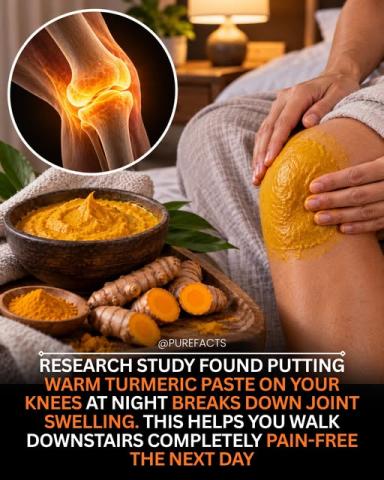
For tennis players in their 50s, 60s, and 70s, staying active can be one of the most rewarding parts of aging. But years of serving, sprinting, stopping, and changing direction can also place considerable stress on the knees, calves, ankles, Achilles tendons, and feet.
When your legs begin to hurt after tennis, it can be tempting to search for a simple home remedy.
One increasingly popular option is turmeric, especially turmeric or curcumin products promoted for joint pain and inflammation.
The important question is:
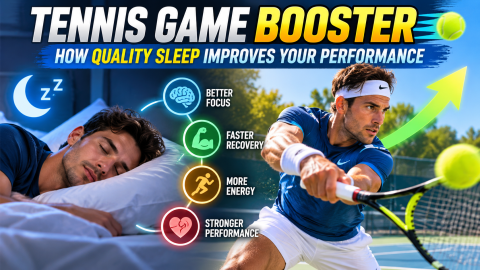
For a tennis player, improving performance is not only about hitting more balls, lifting heavier weights, or spending more hours on the court.
Mastering quality sleep may be one of the most important foundations for improving your game.

"The legs feed the wolf." — Herb Brooks
Introduction: The Secret Engine Behind Every Great Tennis Player
Tennis is a game of bursts: explosive sprints, sudden stops, sharp turns, and relentless rallies. But beneath every explosive movement lies a foundation most players overlook: cardiovascular endurance.
You can have the perfect forehand. You can master the drop shot. You can visualize victory until your mind believes it. But if your heart and lungs cannot keep up, your game will fade when it matters most.
That is where cycling comes in.

Think positive. Fuel smart. Create winning.
In tennis, we chase the edge. We train harder, visualize victory, and fine-tune our technique. But sometimes the biggest gains come from the most unexpected places — like a humble can of sardines.

"The most important shot in tennis is the next one." — Bjorn Borg
Introduction: Where Dreams Meet the Court
Every champion who has ever lifted a trophy began with a dream. Before the Grand Slam titles, before the roaring crowds, before the iconic moments etched into history — there was a thought. A positive, unshakable thought that whispered, "I can do this."
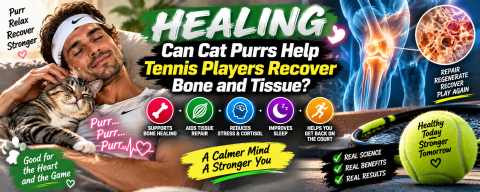
A tennis health blog exploring cat purr frequencies, bone healing, and recovery after injury.
Could the gentle vibration of a cat's purr help a tennis player recover from a bone injury, tendon strain, or muscle damage?
Cat purrs commonly fall within approximately 20–150 Hz, a frequency range that overlaps with some forms of vibration therapy studied in medicine.
As a tennis player, you know the drill. The squeak of shoes on a hard court, the jarring stop-and-go of a baseline rally, and the repetitive strain on your dominant shoulder. Tennis is a high-impact sport that demands explosive power, agility, and mental fortitude.
But what if the secret to elevating your game—and extending your career—isn't found on the court, but in the ocean?
In tennis, everyone notices the big serve. Everyone watches the flashy forehand. Everyone talks about the player who hits winners from impossible angles. But the players who win the most, who last the longest, and who quietly dominate their age groups are rarely the ones who grab the highlight reels. They are the consistent ones. The focused ones. The players who show up every day, do the work, and never let their standards slip. And most people underestimate them completely.

As a tennis professional who has spent decades on American courts, I have watched thousands of players chase strength in the wrong places. They load up barbells, grind through machines, and chase personal records on the bench press, believing that heavier iron is the only path to a stronger game. The research tells a different story. For the tennis player who wants to stay focused, fit, and durable on court, the most powerful tool may already be attached to your body.
 |
 |
|
|
 |