The Rise of a Confident French Fighter
French tennis fans are witnessing something special from Diane Parry. Fresh off winning a WTA 125 title in Paris, the young French star entered Strasbourg with momentum, belief, and a growing sense that her game was reaching another level.
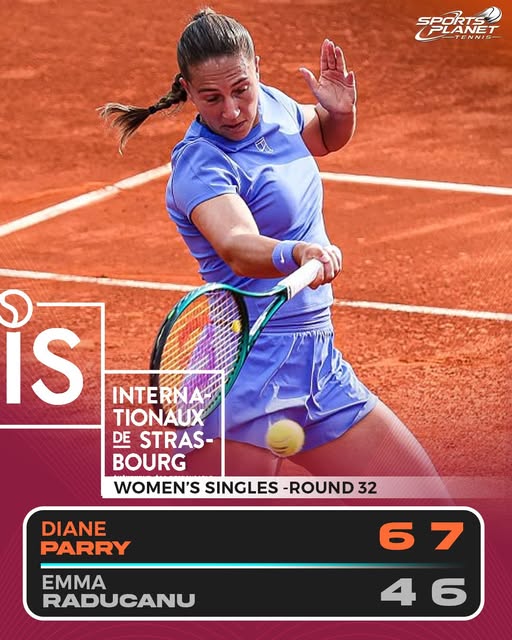
That confidence showed in her straight-sets victory over Emma Raducanu, winning 6-4, 7-6 in a dramatic and emotionally charged battle that electrified the crowd in Strasbourg.
This was not simply another win on the WTA Tour. It was a statement.
Parry displayed maturity, tactical intelligence, emotional control, and fearless shot-making under pressure. Against a former Grand Slam champion like Raducanu, every point mattered. Every adjustment became critical. Every emotional moment tested the mind of both players.
By the end of the match, one thing became clear:
Diane Parry is playing with the confidence of a future elite player.
Strasbourg Battle: A Match Full of Pressure and Momentum Swings
The final scoreline looked straightforward on paper:
- 6-4
- 7-6
But the reality inside the match was far more intense.
The first set featured long rallies, tactical chess battles, and constant pressure on serve. Raducanu tried to attack early, taking the ball quickly and forcing Parry to defend from difficult positions.
Parry responded with remarkable composure.
Instead of panicking, she slowed the tempo when necessary, used heavier topspin to push Raducanu behind the baseline, and mixed in slices that disrupted rhythm. Her all-court creativity became one of the key factors in the match.
By the middle of the opening set, the French player had established control over the tactical patterns.
She was no longer reacting.
She was dictating.
First Set Analysis: How Diane Parry Took Control
The opening set revealed Parry’s tactical growth.
1. Smart Serve Placement
Rather than simply trying to overpower Raducanu, Parry used variety:
- Wide serves to open the court
- Body serves to jam movement
- Kick serves to force higher contact points
This prevented Raducanu from finding consistent aggressive returns.
Modern women’s tennis is not only about power anymore. Placement and disguise matter enormously, especially on clay and slower courts.
Parry understood this perfectly.
2. Heavy Topspin and Height Variation
One of the smartest adjustments from Parry was her use of height over the net.
Instead of hitting flat continuously, she mixed:
- Heavy topspin forehands
- Deep looping balls
- Sudden pace acceleration
This disrupted Raducanu’s timing.
When players like Raducanu strike cleanly, they become dangerous because they can redirect pace quickly. Parry prevented that rhythm from developing.
That is high-level tennis IQ.
3. Emotional Stability Under Pressure
Perhaps the biggest difference in the first set was emotional composure.
Parry looked calm after mistakes.
Raducanu looked frustrated after missed opportunities.
In tennis, emotional reactions affect physical performance. Tight shoulders reduce racquet acceleration. Frustration changes footwork timing. Negative energy impacts decision-making.
Parry stayed mentally free.
That freedom allowed her to swing aggressively during important moments.
Emma Raducanu’s Fight and Tactical Intentions
To fully appreciate Parry’s performance, it is important to understand the challenge presented by Emma Raducanu.
Raducanu remains one of the most naturally talented shot-makers on tour when healthy and confident.
Her strengths include:
- Early ball striking
- Clean timing
- Directional control
- Aggressive baseline hitting
- Quick transitions
Throughout the match, Raducanu attempted to take time away from Parry by stepping inside the baseline and attacking second serves.
There were moments when it worked brilliantly.
Especially in the second set, Raducanu elevated her aggression and nearly shifted momentum completely.
But Parry’s adjustments proved stronger.
The Climax of the Match: A Second-Set Thriller
The true drama came during the second set tiebreak.
This was the emotional climax of the battle.
Pressure Everywhere
The atmosphere inside Strasbourg became electric.
French fans sensed Parry was close to a major victory.
Raducanu sensed the match slipping away.
Both players raised their level dramatically.
Rallies became longer.
Shot quality increased.
Movement intensity exploded.
This is where mental strength separates good players from dangerous competitors.
The Crucial Turning Point
At one critical moment in the tiebreak, Parry produced a fearless backhand down the line under immense pressure.
That shot changed everything.
Instead of playing safely, she trusted her preparation, trusted her mechanics, and attacked.
Champions do this.
Fearless tennis under pressure is not random confidence. It comes from accumulated belief built through practice, recent victories, and emotional momentum.
Winning the Paris WTA 125 title gave Parry exactly that kind of belief.
Crowd Energy and Emotional Fuel
French crowds can create incredible emotional energy for home players.
Parry embraced it beautifully.
Some athletes become nervous under national expectations. Others become energized.
Parry clearly belonged to the second category.
She fed off the atmosphere, using the crowd’s energy to increase intensity during difficult moments.
This emotional synchronization between player and crowd often creates breakthrough performances.
Why Confidence Changes Everything in Tennis
Winning Creates Freedom
Tennis confidence is different from confidence in many other sports.
In tennis, confidence directly affects:
- Swing speed
- Shot selection
- Footwork aggression
- Recovery movement
- Tactical commitment
When players doubt themselves, they hesitate.
When players hesitate, timing disappears.
Parry currently looks free mentally.
That freedom allows her to:
- Go after aggressive shots
- Recover quickly after errors
- Stay committed to tactics
- Trust her instincts
This is dangerous for opponents.
Diane Parry’s Tactical Adjustments During the Match
Mixing Speeds Instead of Hitting One Tempo
One of Parry’s smartest decisions was refusing to play at one speed.
Many players lose against aggressive hitters because they exchange flat baseline power continuously.
Parry avoided that trap.
She mixed:
- Slow looping balls
- Deep defensive slices
- Sudden acceleration
- Sharp angles
- Net approaches
This forced Raducanu to constantly adapt.
In modern tennis, disrupting rhythm is often more valuable than raw power.
Court Positioning
Parry also adjusted her court positioning intelligently.
Early in rallies she often stayed deeper to absorb pace.
But once she detected shorter balls, she attacked immediately.
This balance between defense and offense showed growing maturity.
Young players often over-attack or over-defend.
Parry blended both beautifully.
The Mentality of a Winner
Staying Calm During Tight Moments
The best players in the world understand one truth:
Pressure never disappears.
Instead, champions learn how to function inside pressure.
Parry demonstrated this repeatedly against Raducanu.
Even after difficult games or missed chances, her body language stayed composed.
That matters enormously.
Opponents watch body language constantly.
Strong posture sends psychological messages:
- “I still believe.”
- “I am still dangerous.”
- “You will need to beat me.”
Parry projected that mindset all night.
Short Memory After Mistakes
Elite tennis players need short memories.
One missed forehand cannot affect the next point.
Parry showed excellent emotional reset ability.
After mistakes, she immediately refocused on:
- Footwork
- Serve targets
- Tactical structure
That emotional discipline helped her survive the tense second set.
Technical Breakdown of Diane Parry’s Game
The One-Handed Backhand
Parry’s one-handed backhand remains one of the most beautiful shots in women’s tennis.
It gives her:
- Variety
- Slice control
- Angle creation
- Defensive creativity
Under pressure against Raducanu, that backhand became a weapon.
Especially impressive was her ability to redirect pace crosscourt and suddenly attack down the line.
Movement and Balance
Clay-court movement is an art.
Parry moved exceptionally well:
- Controlled sliding
- Balanced recovery
- Efficient directional changes
Good movement saves energy and improves shot quality.
Her movement consistency allowed her to stay physically strong late in the second set.
Serve Improvement
Perhaps the most underrated part of Parry’s recent development is her serving improvement.
She is placing serves more intelligently and protecting second serves better.
Against aggressive returners like Raducanu, this becomes critical.
Emma Raducanu: Positive Signs Despite the Loss
Even in defeat, there were positive signs for Emma Raducanu.
Her ball striking looked sharper during stretches of the second set, and her willingness to attack showed growing confidence.
She also competed hard mentally despite trailing.
However, several areas still need improvement:
Consistency Under Extended Pressure
Raducanu remains most dangerous in first-strike tennis.
But when rallies extended physically and tactically, Parry gained the edge.
Defensive Transitions
There were moments when Raducanu struggled transitioning from offense to defense.
Parry exploited this with angle changes and spin variation.
Match Rhythm
Because of injuries and interrupted momentum over recent seasons, Raducanu is still rebuilding competitive rhythm.
That rhythm only returns through repeated matches against high-level opponents.
The ATP Influence on Modern Women’s Tennis
Modern WTA tennis increasingly reflects tactical patterns seen on the ATP Tour.
Parry’s match showed several ATP-style elements:
- Heavy topspin construction
- Strategic serve placement
- Pattern-based attacking
- Use of variation
- Emotional control under pressure
This evolution makes women’s tennis more multidimensional than ever before.
Raw power alone is no longer enough.
Players must solve problems tactically during matches.
Parry solved problems brilliantly against Raducanu.
What Makes Diane Parry Dangerous Right Now
Momentum
Winning creates momentum.
Momentum creates belief.
Belief creates fearless tennis.
Parry currently possesses all three.
Tactical Intelligence
She is not playing one-dimensional tennis.
Her ability to adapt mid-match makes her difficult to prepare against.
Home Crowd Confidence
French players often elevate emotionally during home tournaments.
Parry clearly feels comfortable performing in front of French crowds.
That emotional comfort increases performance quality dramatically.
Lessons Recreational Tennis Players Can Learn
This match offered valuable lessons for everyday players.
1. Variety Beats Predictability
Do not hit every ball with identical pace.
Mix:
- Height
- Spin
- Speed
- Angles
Variation creates mistakes.
2. Body Language Matters
Your opponent notices emotional reactions.
Strong posture creates psychological pressure.
3. Stay Calm Under Pressure
Big points require clear thinking.
Champions simplify their focus:
- Footwork
- Breathing
- Target selection
Parry demonstrated this perfectly.
4. Confidence Comes From Preparation
Confidence is built through:
- Repetition
- Match experience
- Tactical understanding
- Physical preparation
Parry’s recent title run clearly strengthened her mindset.
Short Story: The Turning Point Inside the Tiebreak
As the tiebreak intensified, the crowd in Strasbourg became louder with every rally.
Parry walked slowly to the baseline, bouncing the ball calmly while the pressure increased around her.
Across the net stood a Grand Slam champion trying desperately to force a deciding set.
The tension was visible everywhere.
Then came the rally everyone remembered.
Raducanu attacked first with a deep forehand.
Parry defended with heavy topspin.
Another aggressive shot came.
Parry slid wide, recovered, and suddenly unleashed a fearless one-handed backhand down the line.
The stadium exploded.
In that single moment, the match emotionally shifted forever.
Not because of luck.
But because Parry trusted herself completely.
That is the mindset of a winner.
What This Victory Means for Diane Parry
This victory could become one of the most important confidence-building wins of her season.
Beating a player like Raducanu in straight sets while carrying momentum from another title shows genuine competitive growth.
It signals:
- Improved maturity
- Tactical evolution
- Emotional stability
- Rising belief
Those qualities matter enormously during long WTA seasons.
Looking Ahead: Can Diane Parry Go Even Further?
If Parry continues playing with:
- Tactical freedom
- Emotional calm
- Aggressive commitment
- Smart variation
she becomes a dangerous opponent for almost anyone on slower surfaces.
Confidence is currently amplifying every strength in her game.
And when talented players begin believing fully in themselves, breakthrough tournaments often follow.
FAQs
Who did Diane Parry defeat in Strasbourg?
Diane Parry defeated Emma Raducanu in straight sets 6-4, 7-6 to reach the Strasbourg Round of 16.
Why was this win important for Diane Parry?
The victory showed her growing confidence after winning a WTA 125 title in Paris and demonstrated major improvements in tactical maturity and mental toughness.
What was the key turning point in the match?
The second-set tiebreak became the emotional climax, especially after Parry struck a fearless backhand down the line during a high-pressure rally.
What tactical adjustments helped Diane Parry win?
Parry used:
- Heavy topspin
- Slice variation
- Smart serve placement
- Tempo changes
- Intelligent court positioning
These disrupted Raducanu’s rhythm.
What can tennis players learn from this match?
Players can learn the importance of:
- Emotional control
- Tactical variety
- Positive body language
- Confidence through preparation
Diane Parry is no longer simply a promising talent.
She is becoming a confident competitor capable of handling pressure, adjusting tactically, and delivering under emotional intensity.
Her victory over Emma Raducanu in Strasbourg showcased much more than clean shot-making.
It revealed:
- resilience,
- composure,
- courage,
- and the mentality of a player learning how to win consistently.
Right now, her confidence level truly looks sky high.
And when confidence combines with talent, dangerous things happen on the tennis court.