
For nearly two decades, Gael Monfils has been one of the most entertaining athletes in professional tennis.
Fans loved him.
Crowds adored him.
Highlights followed him everywhere.
He produced:
- Impossible defensive shots
- Athletic slides
- Trick plays
- Showmanship moments
- Explosive movement
- Crowd interaction rarely seen in modern tennis
At times, he looked like a basketball player, dancer, sprinter, and tennis player combined into one athlete.
But despite all the talent, speed, and charisma, one painful reality continues to define his career:
Gael Monfils never won a Grand Slam title.
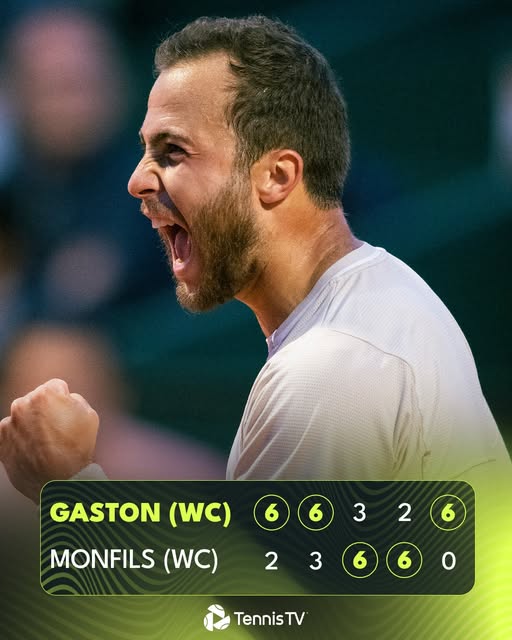
And after another emotional Roland-Garros ending — as Hugo Gaston brought the curtain down on Monfils’ French Open journey — tennis fans are once again asking one of the sport’s biggest “what if” questions.
How could a player this gifted never become a champion at the highest level?
From an ATP expert perspective, the answer is difficult but honest:
Gael Monfils possessed championship athleticism, but he never fully developed the ruthless championship mentality required to dominate Grand Slam tennis consistently.
That truth may sound harsh to loyal fans.
But tennis history is brutally honest.
Entertainment and championships are not always the same thing.
The Difference Between Entertainer and Champion
This became the defining contrast of Monfils’ career.
Champions are often obsessed with:
- Tactical discipline
- Daily repetition
- Emotional control
- Point construction
- Ruthless focus
- Consistency under pressure
Monfils sometimes appeared driven more by:
- Crowd energy
- Emotional excitement
- Spectacular moments
- Creative improvisation
There is nothing wrong with entertaining fans.
In fact, tennis needs personalities like Monfils.
But Grand Slam titles usually demand a more cold-blooded mentality.
The greatest champions treat tennis almost like war:
- Relentless preparation
- Relentless discipline
- Relentless sacrifice
Monfils often approached the sport with more freedom and spontaneity.
That created unforgettable moments.
But it also created inconsistency.
Hugo Gaston Ends the Roland-Garros Chapter
At French Open, the emotional atmosphere surrounding Monfils felt heavy from the beginning.
French fans understood this might be one of the final Roland-Garros appearances of one of their most beloved entertainers.
But across the net stood another Frenchman:
Hugo Gaston.
And Gaston played fearless, intelligent tennis.
The younger French player exposed several realities:
- Monfils’ declining physical explosiveness
- Slower recovery speed
- Reduced defensive range
- Difficulty sustaining intensity over long rallies
Most importantly, Gaston played with sharper tactical focus.
That difference slowly took control of the match.
ATP Expert Analysis: Monfils Still Has Beautiful Strokes
One reason Monfils’ career frustrates analysts is because the talent was undeniably elite.
Even late in his career, he still shows:
- Excellent racket acceleration
- Smooth forehand timing
- Explosive movement flashes
- Athletic instincts
- Natural defensive skills
Technically, Monfils always had enough tools to challenge the world’s best players.
That is what makes the absence of a Grand Slam title feel so surprising.
The Problem Was Never Pure Talent
This is critical to understand.
Gael Monfils was never limited by lack of ability.
The real issue was often:
- Tactical discipline
- Emotional consistency
- Competitive focus
- Strategic patience
At times, Monfils seemed more interested in creating memorable moments than building ruthless winning structures.
Fans loved it.
But elite tennis punishes emotional improvisation eventually.
Monfils Played Tennis Like an Artist
Some players compete like machines.
Others compete like artists.
Monfils belonged firmly in the second category.
He often relied on:
- Athletic instinct
- Improvisation
- Creativity
- Crowd emotion
Instead of:
- Structured patterns
- Percentage tennis
- Repetitive discipline
- Point-by-point ruthlessness
This made him unpredictable and exciting.
But unpredictability can become dangerous over two-week Grand Slam tournaments.
Championship tennis usually rewards boring consistency more than entertainment.
Why Grand Slam Champions Think Differently
The greatest champions:
- Novak Djokovic
- Rafael Nadal
- Roger Federer
shared something beyond talent.
They possessed extreme mental obsession.
Every detail mattered:
- Recovery
- Nutrition
- Sleep
- Tactical repetition
- Emotional control
- Point construction
Monfils sometimes appeared emotionally freer and less rigid.
That made him more lovable.
But perhaps less deadly.
ATP Coaches Often Wanted More Tactical Structure
Many tennis analysts throughout Monfils’ career repeated similar frustrations.
Why?
Because Monfils often abandoned smart tactical patterns.
Instead of:
- Finishing points efficiently
- Holding court position aggressively
- Maintaining pressure
he occasionally drifted into:
- Spectacular defense
- Extended rallies
- Showmanship exchanges
These moments excited crowds enormously.
But they also:
- Burned physical energy
- Increased risk
- Reduced efficiency
Against elite opponents, wasted energy becomes fatal.
Monfils Was One of the Best Athletes Tennis Ever Produced
Physically, Monfils was extraordinary.
Few players in ATP history matched his:
- Speed
- Elastic movement
- Vertical jumping ability
- Recovery explosiveness
- Court coverage
At his peak, he could retrieve impossible balls that most players would never even reach.
Crowds erupted because he transformed defense into theater.
But elite championship tennis is not judged on highlights alone.
It is judged on trophies.
The “Clown” Reputation Hurt His Legacy
Some critics labeled Monfils more entertainer than champion.
That description feels unfair emotionally because he worked extremely hard physically throughout his career.
However, the criticism came from one core observation:
Sometimes Monfils appeared emotionally distracted from the ruthless seriousness required to dominate major tournaments consistently.
This does not mean he lacked professionalism.
It means:
- His competitive identity prioritized freedom
- He embraced entertainment
- He fed emotionally from crowd interaction
Meanwhile, the greatest champions often looked emotionally colder.
Hugo Gaston Played Smarter Tennis
Against Monfils at Roland Garros, Hugo Gaston understood something important:
Do not try out-athleting Monfils.
Out-think him instead.
Gaston used:
- Drop shots
- Variation
- Angle changes
- Tempo disruption
- Tactical patience
This forced Monfils constantly into uncomfortable movement patterns.
Older legs cannot recover like younger legs.
Gradually, Gaston controlled the emotional and tactical rhythm.
ATP Expert Breakdown: Monfils’ Biggest Career Weakness
The biggest issue was not shot-making.
It was sustained championship focus.
Grand Slam champions maintain:
- Tactical discipline for hours
- Emotional intensity daily
- Ruthless concentration under pressure
Monfils sometimes fluctuated emotionally too much during matches.
His focus occasionally drifted toward:
- Crowd engagement
- Emotional swings
- Improvisational tennis
Against average players, his athletic gifts often compensated.
Against all-time greats, it became costly.
The Era He Played In Was Also Brutal
To be fair, Monfils competed during perhaps the greatest era in tennis history.
He faced:
- Novak Djokovic
- Rafael Nadal
- Roger Federer
- Andy Murray
This generation crushed the dreams of many elite players.
Even incredible talents struggled winning majors during this era.
But still, many ATP experts believe Monfils could have achieved more with greater tactical seriousness.
Roland Garros Was Always Emotional for Monfils
Playing in Paris carried enormous pressure.
French crowds adored him because:
- He entertained
- He showed personality
- He connected emotionally
But emotional energy cuts both ways.
Sometimes crowd expectations intensified pressure and emotional volatility.
Monfils often rode emotional waves rather than calming them.
Champions usually control emotional temperature more consistently.
The Physical Decline Is Becoming Visible
Now approaching retirement years, the physical signs are obvious.
Monfils still flashes brilliance.
But sustaining elite intensity has become harder.
Against Gaston:
- Recovery slowed
- Defensive explosiveness faded
- Rally endurance declined
- Movement became less sharp
Father Time eventually defeats every athlete.
Even the most spectacular ones.
Why Fans Still Love Gael Monfils
Despite never winning a Grand Slam, Monfils remains beloved globally.
Why?
Because sports are not only about trophies.
Fans remember:
- Emotion
- Entertainment
- Personality
- Joy
Monfils brought joy to tennis.
He made crowds laugh.
He made impossible shots feel possible.
He turned tennis into performance art.
That legacy matters too.
ATP Expert Advice: Talent Must Be Controlled
Young players should study Monfils carefully.
His career teaches important lessons.
1. Athleticism Alone Is Not Enough
Even world-class movement cannot replace tactical discipline.
2. Focus Wins Championships
Champions maintain concentration relentlessly.
3. Entertainment Must Not Replace Efficiency
Highlights do not equal titles.
4. Emotional Stability Matters
Crowd emotion can inspire players — but also distract them.
What Monfils Could Have Been
This is what makes his story fascinating.
At his absolute best:
- He could challenge anyone
- He could defeat top players
- He could electrify stadiums
But sustaining that level consistently across entire Grand Slam tournaments proved difficult.
His career became a collection of:
- Incredible moments
- Spectacular matches
- Emotional memories
rather than championship dominance.
Hugo Gaston Represents a Different Style
Gaston’s victory symbolized something deeper.
Modern tennis increasingly rewards:
- Tactical discipline
- Variation
- Mental patience
- Structured point construction
Gaston did not overpower Monfils physically.
He out-managed the match mentally.
That difference decided everything.
Retirement Feels Closer Now
After this Roland-Garros defeat, many fans sense the end approaching.
Monfils has given tennis:
- Passion
- Energy
- Entertainment
- Athletic brilliance
But physically and competitively, the final chapter appears near.
Tennis careers move brutally fast.
One generation fades.
Another arrives immediately.
Final Thoughts: Gael Monfils Was Never Ordinary — But He Was Never Fully Ruthless Either
Gael Monfils leaves behind one of the most unique careers in modern tennis.
He was:
- Explosive
- Athletic
- Entertaining
- Creative
- Emotional
- Unforgettable
But Grand Slam champions usually require something colder:
- Ruthless focus
- Relentless discipline
- Tactical obsession
- Emotional control
Monfils often chose expression over structure.
Joy over rigidity.
Entertainment over ruthless efficiency.
That decision may have cost him championships.
Yet it also made him one of the most beloved players of his era.
Now, as Hugo Gaston helps bring the curtain down on Monfils’ Roland-Garros story, tennis fans around the world are left reflecting on a fascinating truth:
Not every great talent becomes a champion.
But some players become unforgettable anyway.