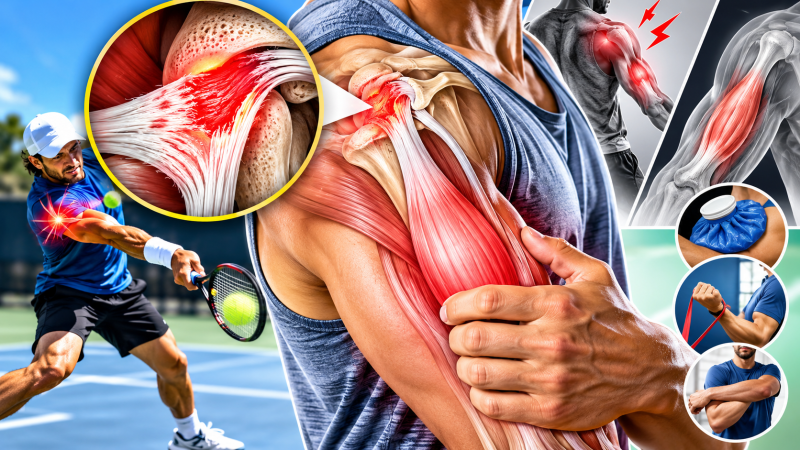
If you have ever felt a sharp, nagging pain at the front of your shoulder or elbow while lifting groceries, reaching for something on a high shelf, performing bicep curls, or throwing a ball, you may be experiencing biceps tendinitis. This common overuse injury occurs when the tendon connecting the biceps muscle to the shoulder or elbow becomes irritated or inflamed.
Biceps tendinitis affects thousands of Americans each year. It is particularly common among weightlifters, construction workers, mechanics, painters, tennis players, baseball athletes, swimmers, and anyone whose work or hobbies involve repetitive overhead movements.
Fortunately, advances in sports medicine and physical therapy have dramatically improved recovery outcomes. Modern rehabilitation focuses on restoring strength and movement rather than relying on prolonged rest.
This article explores the anatomy of the biceps tendon, common symptoms, differences between shoulder and elbow tendinitis, evidence-based treatments, and a real-world rehabilitation case from the United States.
Understanding Biceps Tendon Anatomy
Although most people think of the biceps as simply the large muscle at the front of the upper arm, it actually relies on tendons at both ends to produce movement.
Proximal Biceps Tendons (Shoulder)
At the shoulder, the biceps has two tendons:
- Long head tendon
- Short head tendon
The long head passes through a narrow groove in the upper arm bone before attaching inside the shoulder joint. Because this tendon experiences constant movement during lifting and overhead activities, it is the portion most commonly affected by tendinitis.
Distal Biceps Tendon (Elbow)
The lower tendon attaches the biceps muscle to the forearm near the elbow. This tendon helps:
- Bend the elbow
- Rotate the forearm
- Generate lifting power
- Stabilize pulling movements
Although less common than shoulder tendinitis, inflammation near the elbow can develop from repetitive lifting or heavy manual labor.
If left untreated for an extended period, chronic inflammation may weaken the tendon and increase the risk of partial or complete rupture.
Shoulder vs. Elbow Biceps Tendinitis
Because the biceps crosses two major joints, symptoms depend on which tendon has become irritated.
| Feature | Shoulder (Proximal) | Elbow (Distal) |
|---|---|---|
| Primary Pain | Front of the shoulder | Front of the elbow |
| Pain During | Overhead reaching, throwing, lifting | Curling, pulling, twisting the forearm |
| Common Activities | Tennis, swimming, baseball, weightlifting | Heavy lifting, manual labor, climbing |
| Associated Injuries | Rotator cuff tears, shoulder impingement | Forearm overuse injuries |
Recognizing the location of pain helps healthcare professionals determine the most appropriate treatment strategy.
Common Symptoms
Patients with biceps tendinitis often experience:
- Deep aching pain at the front of the shoulder or elbow
- Tenderness over the tendon
- Pain when lifting objects
- Difficulty reaching overhead
- Pain during throwing motions
- Weakness while carrying heavy items
- Clicking or snapping sensations
- Reduced shoulder mobility
- Night pain when sleeping on the affected side
Symptoms usually develop gradually over weeks or months rather than appearing suddenly.
What Causes Biceps Tendinitis?
Several factors can overload the tendon over time.
Common causes include:
- Repetitive overhead activities
- Heavy weightlifting
- Poor exercise technique
- Weak rotator cuff muscles
- Poor posture
- Tight chest muscles
- Shoulder instability
- Sudden increases in training intensity
- Manual labor occupations
- Repetitive sports motions
Instead of one major injury, tiny microscopic tears accumulate over time until inflammation develops.
Real-World U.S. Case Study
Patient Information
Patient: Marcus (name changed)
Age: 28
Occupation: Software Engineer
Location: Boston, Massachusetts
Activities:
- Functional fitness
- Cross-training
- Recreational softball
Initial Complaint
Marcus developed deep aching pain in the front of his right shoulder after several weeks of intense strength training.
His symptoms became worse during:
- Overhead presses
- Throwing a softball
- Carrying heavy grocery bags
- Sleeping on his right side
Eventually, the discomfort prevented him from participating in his normal workouts.
Clinical Assessment
During evaluation, the physical therapist identified:
- Tenderness over the long head of the biceps tendon
- Poor shoulder blade movement
- Tight pectoralis minor muscles
- Limited shoulder mobility
- Weak lower trapezius muscles
- Rotator cuff weakness
These movement problems forced the biceps tendon to compensate, increasing stress during every overhead movement.
Instead of prescribing complete rest, the therapist developed a progressive rehabilitation program focused on restoring movement quality.
Rehabilitation Program
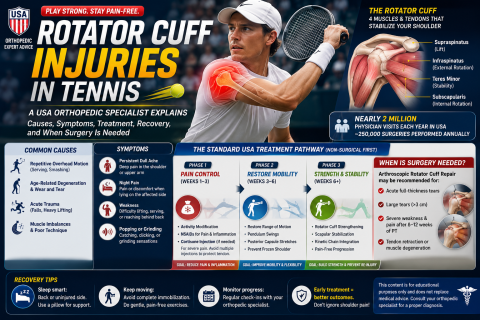
Phase 1 (Weeks 1–2): Calm the Tendon
Goals:
- Reduce irritation
- Maintain fitness
- Prevent tendon deconditioning
Marcus temporarily stopped:
- Overhead presses
- Throwing drills
- Heavy pulling exercises
He continued:
- Walking
- Leg training
- Core exercises
Treatment included:
- Pain-free isometric exercises
- Shoulder blade activation
- Gentle mobility exercises
- Activity modification
Phase 2 (Weeks 3–4): Restore Mobility
The therapist focused on improving shoulder mechanics through:
- Pectoralis minor stretching
- Posterior capsule stretching
- Soft tissue mobilization
- Thoracic spine mobility
- Scapular mobility exercises
Improving shoulder movement reduced excessive stress on the inflamed tendon.
Phase 3 (Weeks 5–8): Progressive Strengthening
Once pain decreased, Marcus began strengthening exercises.
The primary focus was eccentric loading, where the muscle slowly lowers the weight.
Exercises included:
- Slow eccentric bicep curls
- Resistance band rows
- External shoulder rotation
- Serratus anterior strengthening
- Lower trapezius exercises
Research consistently shows that eccentric strengthening promotes healthy collagen remodeling within injured tendons.
Phase 4 (Weeks 9–12): Return to Sport
Marcus gradually resumed:
- Light overhead pressing
- Medicine ball throws
- Softball practice
- Functional lifting
- Sport-specific drills
His therapist monitored movement quality, pain levels, and shoulder stability throughout the progression.
Recovery Outcome
After 12 weeks of rehabilitation:
- Shoulder pain completely resolved.
- Full range of motion returned.
- Strength matched the opposite arm.
- Throwing mechanics normalized.
- Marcus resumed cross-training without restrictions.
- He returned to recreational softball completely pain-free.
Modern Physical Therapy Approaches in the United States
Orthopedic specialists have shifted away from recommending prolonged rest for chronic tendon injuries.
Instead, successful treatment now focuses on:
- Progressive strengthening
- Controlled tendon loading
- Movement correction
- Postural improvement
- Muscle balance restoration
- Activity modification instead of complete inactivity
Research suggests that complete rest may weaken the tendon, making reinjury more likely when normal activities resume.
Are Cortisone Injections Helpful?
Corticosteroid injections may temporarily reduce pain and inflammation.
However, they should be used carefully because repeated injections can:
- Weaken tendon tissue
- Delay healing
- Increase rupture risk
- Mask symptoms without correcting the underlying problem
Most orthopedic specialists recommend combining injections with a structured rehabilitation program when appropriate.
When Is Surgery Necessary?
Approximately 90% of patients recover successfully with conservative treatment, including physical therapy, exercise, and activity modification.
Surgery is generally reserved for:
- Complete tendon rupture
- Significant tendon tears
- Persistent pain after three to six months of rehabilitation
- Severe weakness
- Failed nonsurgical treatment
Common procedures include:
- Biceps tenodesis
- Tendon repair
- Debridement
- Rotator cuff repair if associated injuries are present
Recovery Timeline
| Recovery Stage | Typical Time |
| Pain reduction | 2–4 weeks |
| Mobility improvement | 4–6 weeks |
| Strength rebuilding | 6–10 weeks |
| Return to sports | 10–16 weeks |
| Full tendon remodeling | Up to 12 months |
Recovery time varies depending on injury severity, age, overall health, and adherence to rehabilitation.
Helpful Exercises
Patients often benefit from:
- Isometric biceps holds
- Tempo bicep curls
- Resistance band rows
- External rotation exercises
- Shoulder blade strengthening
- Serratus anterior activation
- Chest stretching
- Thoracic mobility exercises
Always consult a healthcare professional before beginning a rehabilitation program, especially if pain is severe or persistent.
Prevention Tips
Reduce your risk of developing biceps tendinitis by:
- Warming up before exercise
- Improving lifting technique
- Strengthening the rotator cuff
- Maintaining shoulder flexibility
- Correcting poor posture
- Increasing training gradually
- Allowing adequate recovery between workouts
- Avoiding repetitive overuse without rest
When Should You See a Doctor?
Seek medical attention if you experience:
- Sudden popping sensation in the shoulder or elbow
- Significant bruising
- Visible muscle deformity
- Severe weakness
- Inability to lift objects
- Persistent pain lasting longer than two weeks
- Night pain that disrupts sleep
- Numbness or tingling in the arm
Prompt evaluation can prevent further tendon damage and improve long-term outcomes.
Final Thoughts
Biceps tendinitis is a common but highly treatable condition. Although the pain can interfere with daily life, modern rehabilitation techniques have significantly improved recovery rates.
Marcus's successful recovery demonstrates that healing involves more than simply resting the injured tendon. Progressive strengthening, correcting movement mechanics, restoring shoulder stability, and gradually returning to activity provide the best opportunity for long-term success.
Whether you are an athlete, fitness enthusiast, manual laborer, or someone who simply wants to perform everyday tasks without pain, early diagnosis and a structured rehabilitation program can help you return to full function and prevent future injuries.