
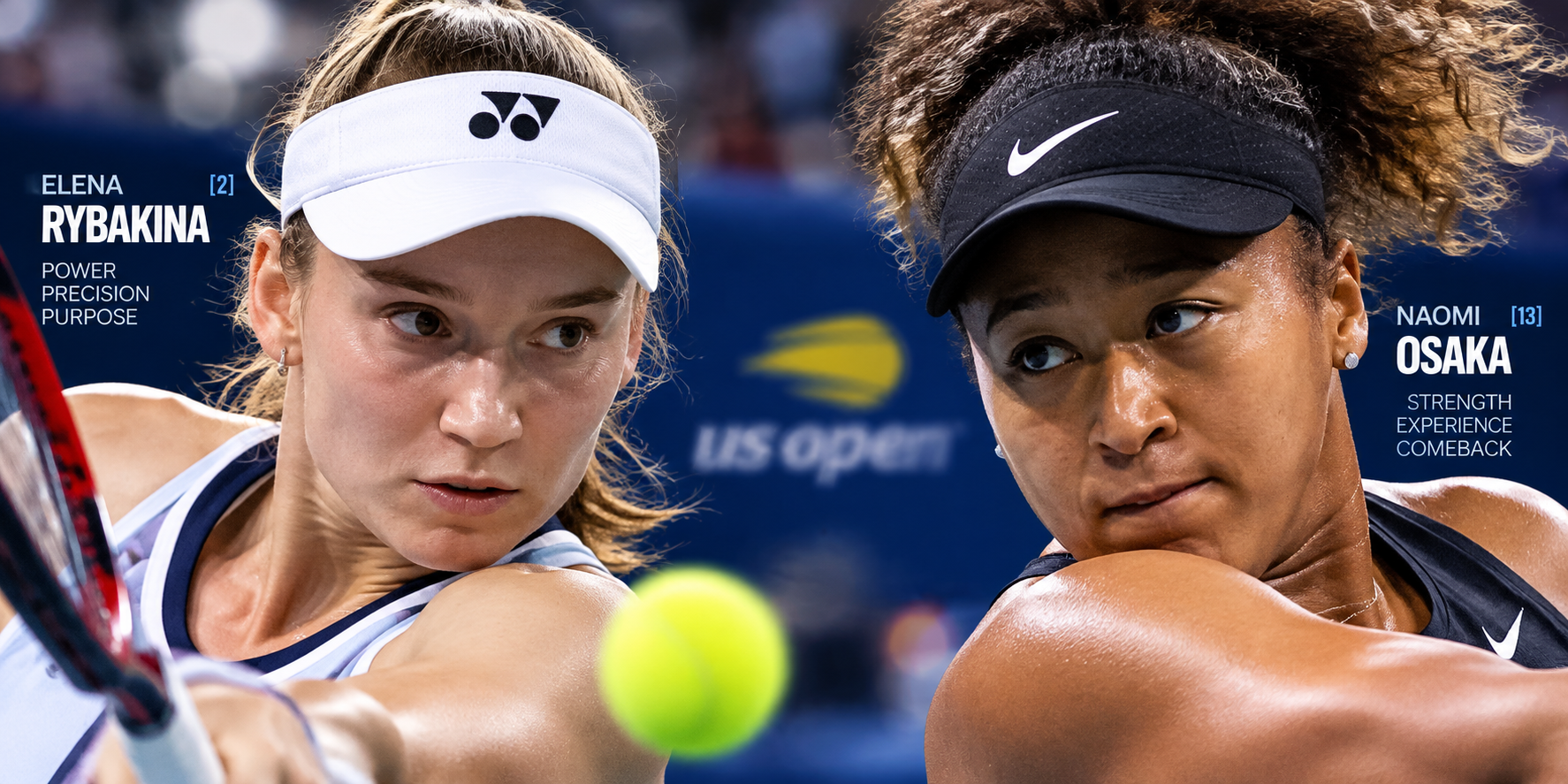
[2] Elena Rybakina defeated [13] Naomi Osaka 6–1, 6–4, delivering a powerful straight-set performance built around aggressive first-strike tennis, relentless pressure, and smart exploitation of Osaka’s weaknesses.
Rybakina did not need a dramatic tactical overhaul during the match. Instead, she established a clear game plan early, executed it consistently, and made small dynamic adjustments whenever Osaka threatened to regain control.
The result was a dominant performance in which Rybakina consistently dictated the points.
Rybakina's Game Plan: Attack Before Osaka Can Settle
The biggest tactical advantage for Rybakina was her ability to take control of rallies immediately.
Her plan was straightforward:
- Attack with the first opportunity.
- Use her serve to create short balls.
- Strike aggressively from the baseline.
- Keep Osaka under scoreboard and time pressure.
- Avoid giving Osaka comfortable rhythm.
- Finish points before long rallies developed.
Rybakina's combination of serve power, deep groundstrokes and clean ball striking made it difficult for Osaka to establish her preferred attacking patterns.
Rather than allowing Osaka to dictate with her own first strike, Rybakina repeatedly attempted to become the player initiating the attack.
The Serve Created the Foundation
Rybakina's serve was central to the strategy.
A strong first serve gave her immediate control of the point and often forced Osaka to defend rather than attack.
That created a simple pattern:
Serve → short return → aggressive first groundstroke → control the open court.
This reduced the number of neutral exchanges and allowed Rybakina to play on her terms.
Her serve also protected her from extended baseline battles. When a player can consistently start points with an advantage, the opponent has fewer opportunities to build momentum.
Rybakina Hunted Osaka's Vulnerable Positions
The key was not simply hitting hard.
Rybakina used her power to attack specific areas of the court.
When Osaka was positioned too centrally, Rybakina could redirect the ball into open space. When Osaka moved deeper behind the baseline, Rybakina could use her pace and depth to prevent her from stepping forward comfortably.
This created a constant dilemma for Osaka:
Stay back and absorb the pace, or move forward and risk being exposed by Rybakina's next shot.
That tactical pressure helped Rybakina maintain control of the rallies.
No Major Change Was Necessary
One of the most impressive aspects of Rybakina's performance was that she did not appear to need a major tactical change after establishing her advantage.
She was already doing the most important things correctly:
Serve effectively.
Take the ball early.
Maintain depth.
Attack short balls.
Keep Osaka from finding rhythm.
When a strategy is working this well, changing it unnecessarily can actually create problems.
Rybakina instead maintained her core game plan while making small dynamic adjustments based on Osaka's positioning and shot selection.
Dynamic Adjustment: Read the Opponent, Then Attack
This is where elite tennis becomes more than simply hitting hard.
Rybakina could adjust the direction, height and pace of her shots depending on what Osaka gave her.
If Osaka stayed deep, Rybakina could use depth and pace to keep her pinned.
If Osaka attempted to shorten the rally, Rybakina could step forward and attack.
If Osaka's positioning opened the court, Rybakina could redirect the next ball.
The objective remained the same:
Do not allow Osaka to become the player controlling the point.
That consistency is an important reason why Rybakina was able to maintain her advantage.
Why Osaka Struggled to Change the Match Dynamic
For Osaka, the biggest challenge was finding a way to disrupt Rybakina's rhythm.
Against an opponent with Rybakina's serve and baseline power, simply trying to match power can become dangerous.
Osaka needed to change the structure of the points.
Potential solutions included:
- Mixing return positions.
- Using more variation in rally height and pace.
- Redirecting Rybakina's power rather than matching it.
- Finding opportunities to attack Rybakina's second serve.
- Bringing Rybakina forward with shorter balls.
- Creating more changes of direction.
But Rybakina's early dominance made those adjustments difficult to implement consistently.
The Second Set Shows Rybakina's Composure
The 6–4 second set tells a different story from the opening 6–1 set.
Osaka was able to compete more closely, but Rybakina did not allow the match to become a complete momentum shift.
This is an important characteristic of top-level tennis.
A player does not necessarily need to dominate every game. Instead, the goal is to recognize when the opponent is improving and prevent that improvement from becoming momentum.
Rybakina maintained her aggressive identity and continued looking for opportunities to finish points on her terms.
The Tactical Battle in One Sentence
Rybakina's winning formula was simple:
Use the serve to gain the first advantage, use power and depth to push Osaka backward, then attack the next ball before Osaka could establish her own rhythm.
That game plan did not require constant reinvention.
It required discipline, execution and awareness of Osaka's positioning.
What Rybakina Can Take Forward
The victory provides a strong blueprint for Rybakina against other elite hard-court opponents.
Her biggest weapons remain:
1. Serve dominance
A powerful first serve can create immediate control.
2. First-strike tennis
Rybakina is most dangerous when she can attack early in the rally.
3. Baseline penetration
Deep, powerful groundstrokes prevent opponents from comfortably building points.
4. Tactical patience
She did not need to overcomplicate a strategy that was already working.
5. Dynamic adjustments
Small changes in direction and court positioning were enough to respond to Osaka's attempts to change the match.
Final Analysis
Elena Rybakina's 6–1, 6–4 victory over Naomi Osaka was a demonstration of controlled aggression.
She did not win simply because she hit harder.
She won because she consistently put herself in the position to hit the right aggressive shot at the right moment.
The match also showed an important principle of modern tennis: tactical adjustment does not always mean changing the entire game plan.
Sometimes the smartest adjustment is to recognize the opponent's weakness, keep attacking it, and make only the small changes necessary to prevent the opponent from escaping the pattern.
Against Osaka, Rybakina's formula worked.
Power created the advantage.
Serve created the opportunities.
Court positioning created the pressure.
And disciplined execution converted that pressure into a straight-set victory.